Skip to content
GenoLensGenoLens

SLC4A11

Chr 20p13

solute carrier family 4 member 11

Aliases:
dJ794I6.2, BTR1, NaBC1, FECD4
MANE:
ENST00000642402.1

Annotations refreshed 10 hours ago.

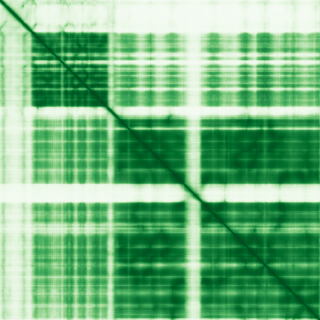
Predicted protein structure

Clinical relevance (Genomics England PanelApp)

Diagnostic Grade (Green)

  • Corneal abnormalities

    BOTH monoallelic and biallelic, autosomal or pseudoautosomal
  • Corneal dystrophy

    BIALLELIC, autosomal or pseudoautosomal
  • DDG2P

    BIALLELIC, autosomal or pseudoautosomal
  • Monogenic hearing loss

    BIALLELIC, autosomal or pseudoautosomal
  • Intellectual disability

    BIALLELIC, autosomal or pseudoautosomal
  • Fetal anomalies

    BIALLELIC, autosomal or pseudoautosomal
  • Structural eye disease

    BIALLELIC, autosomal or pseudoautosomal

Disease associations (Open Targets)

  • corneal dystrophy, Fuchs endothelial, 4

    0.81
  • congenital hereditary endothelial dystrophy of cornea

    0.75
  • corneal dystrophy-perceptive deafness syndrome

    0.72
  • Corneal dystrophy - perceptive deafness

    0.71
  • corneal endothelial dystrophy

    0.69
  • Fuchs endothelial corneal dystrophy

    0.62
  • corneal dystrophy

    0.50
  • hereditary disease

    0.42
  • Abnormality of refraction

    0.31
  • Sensorineural hearing impairment

    0.30

Score is the Open Targets composite evidence score (0-1). Higher = stronger gene-disease association.

Protein function (UniProt)

Solute carrier family 4 member 11

Multifunctional transporter with an impact in cell morphology and differentiation. In the presence of borate B(OH)4(-), acts as a voltage-dependent electrogenic Na(+)-coupled B(OH)4(-) cotransporter controlling boron homeostasis (PubMed:15525507). At early stages of stem cell differentiation, participates in synergy with ITGA5-ITGB1 and ITGAV-ITGB3 integrins and BMPR1A to promote cell adhesion and contractility that drives differentiation toward osteogenic commitment while inhibiting adipogenesis (By similarity). In the absence of B(OH)4(-), acts as a Na(+)-coupled OH(-) or H(+) permeable channel with implications in cellular redox balance (PubMed:15525507, PubMed:28642546). Regulates the oxidative stress response in corneal endothelium by enhancing antioxidant defenses and protecting cells from reactive oxygen species (PubMed:28642546). In response to hypo-osmotic challenge, also acts as a water permeable channel at the basolateral cell membrane of corneal endothelial cells and facilitates transendothelial fluid reabsorption in the aqueous humor (PubMed:23813972, PubMed:25007886, PubMed:31273259). In the presence of ammonia, acts as an electrogenic NH3/H(+) cotransporter and may play a role in ammonia transport and reabsorption in renal Henle's loop epithelium (PubMed:27581649)

Data sources: HGNC (CC BY 4.0), AlphaFold (CC BY 4.0, Jumper et al. Nature 2021), Genomics England PanelApp (CC BY 4.0), ClinGen, Open Targets (CC0), UniProt.

Not for sole clinical decision-making. Always verify against primary sources.