Skip to content
GenoLensGenoLens

SLC6A1

Chr 3p25.3

solute carrier family 6 member 1

Aliases:
GAT1, GABATR, GABATHG, GAT-1, hGAT-1
MANE:
ENST00000287766.10

Annotations refreshed 9 hours ago.

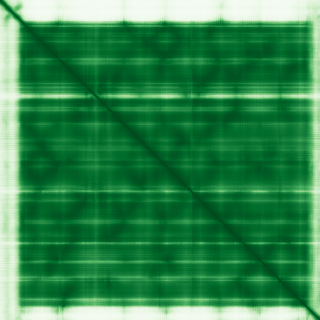
Predicted protein structure

Clinical relevance (Genomics England PanelApp)

Diagnostic Grade (Green)

  • DDG2P

    MONOALLELIC, autosomal or pseudoautosomal, imprinted status unknown
  • Early onset or syndromic epilepsy

    MONOALLELIC, autosomal or pseudoautosomal, NOT imprinted
  • Intellectual disability

    MONOALLELIC, autosomal or pseudoautosomal, NOT imprinted
  • Fetal anomalies

    MONOALLELIC, autosomal or pseudoautosomal, imprinted status unknown

Disease associations (Open Targets)

  • epilepsy with myoclonic atonic seizures

    0.76
  • Seizure

    0.59
  • hereditary disease

    0.54
  • Intellectual disability

    0.50
  • epilepsy

    0.48
  • Neurodevelopmental delay

    0.48
  • neurodevelopmental disorder

    0.43
  • generalized anxiety disorder

    0.38
  • autosomal dominant non-syndromic intellectual disability

    0.37
  • developmental and epileptic encephalopathy 94

    0.34

Score is the Open Targets composite evidence score (0-1). Higher = stronger gene-disease association.

Protein function (UniProt)

Sodium- and chloride-dependent GABA transporter 1

Mediates transport of gamma-aminobutyric acid (GABA) together with sodium and chloride and is responsible for the reuptake of GABA from the synapse (PubMed:30132828). The translocation of GABA, however, may also occur in the reverse direction leading to the release of GABA (By similarity). The direction and magnitude of GABA transport is a consequence of the prevailing thermodynamic conditions, determined by membrane potential and the intracellular and extracellular concentrations of Na(+), Cl(-) and GABA (By similarity). Can also mediate sodium- and chloride-dependent transport of hypotaurine but to a much lower extent as compared to GABA (By similarity)

Data sources: HGNC (CC BY 4.0), AlphaFold (CC BY 4.0, Jumper et al. Nature 2021), Genomics England PanelApp (CC BY 4.0), ClinGen, Open Targets (CC0), UniProt.

Not for sole clinical decision-making. Always verify against primary sources.