Skip to content
GenoLensGenoLens

SLIT2

Chr 4p15.31

slit guidance ligand 2

Aliases:
Slit-2
MANE:
ENST00000504154.6

Annotations refreshed 1 month ago.

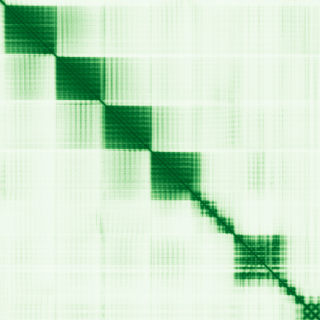
Predicted protein structure

Clinical relevance (Genomics England PanelApp)

Moderate Evidence (Amber)

  • CAKUT

  • Unexplained kidney failure in young people

  • Unexplained young onset end-stage renal disease - additional genes

    Unknown

Disease associations (Open Targets)

  • congenital anomaly of kidney and urinary tract

    0.45
  • type 2 diabetes mellitus

    0.40
  • osteoarthritis

    0.33
  • Abnormality of the immune system

    0.32
  • adolescent idiopathic scoliosis

    0.31
  • Paroxysmal supraventricular tachycardia

    0.31
  • ocular hypotension

    0.31
  • ovarian neoplasm

    0.29
  • gram-negative bacterial infections

    0.29
  • placenta praevia

    0.29

Score is the Open Targets composite evidence score (0-1). Higher = stronger gene-disease association.

Protein function (UniProt)

Slit homolog 2 protein

Thought to act as molecular guidance cue in cellular migration, and function appears to be mediated by interaction with roundabout homolog receptors. During neural development involved in axonal navigation at the ventral midline of the neural tube and projection of axons to different regions. SLIT1 and SLIT2 seem to be essential for midline guidance in the forebrain by acting as repulsive signal preventing inappropriate midline crossing by axons projecting from the olfactory bulb. In spinal cord development may play a role in guiding commissural axons once they reached the floor plate by modulating the response to netrin. May be implicated in spinal cord midline post-crossing axon repulsion. In vitro, only commissural axons that crossed the midline responded to SLIT2. In the developing visual system appears to function as repellent for retinal ganglion axons by providing a repulsion that directs these axons along their appropriate paths prior to, and after passage through, the optic chiasm. In vitro, collapses and repels retinal ganglion cell growth cones. Seems to play a role in branching and arborization of CNS sensory axons, and in neuronal cell migration. In vitro, Slit homolog 2 protein N-product, but not Slit homolog 2 protein C-product, repels olfactory bulb (OB) but not dorsal root ganglia (DRG) axons, induces OB growth cones collapse and induces branching of DRG axons. Seems to be involved in regulating leukocyte migration

Data sources: HGNC (CC BY 4.0), AlphaFold (CC BY 4.0, Jumper et al. Nature 2021), Genomics England PanelApp (CC BY 4.0), ClinGen, Open Targets (CC0), UniProt.

Not for sole clinical decision-making. Always verify against primary sources.