Skip to content
GenoLensGenoLens

SMARCB1

Chr 22q11.23

SWI/SNF related BAF chromatin remodeling complex subunit B1

Aliases:
BAF47, Ini1, INI-1, Snr1, hSNFS
MANE:
ENST00000644036.2

Annotations refreshed 1 month ago.

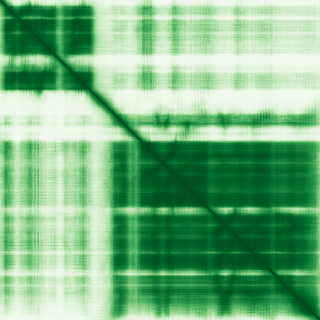
Predicted protein structure

Clinical relevance (Genomics England PanelApp)

Diagnostic Grade (Green)

  • Adult solid tumours cancer susceptibility

    MONOALLELIC, autosomal or pseudoautosomal, imprinted status unknown
  • Adult solid tumours for rare disease

    MONOALLELIC, autosomal or pseudoautosomal, imprinted status unknown
  • Childhood solid tumours

    MONOALLELIC, autosomal or pseudoautosomal, imprinted status unknown
  • Childhood solid tumours cancer susceptibility

    MONOALLELIC, autosomal or pseudoautosomal, imprinted status unknown
  • DDG2P

    MONOALLELIC, autosomal or pseudoautosomal, imprinted status unknown
  • Embryonal tumour of possible germline origin

    MONOALLELIC, autosomal or pseudoautosomal, imprinted status unknown
  • Familial tumours of the nervous system

    MONOALLELIC, autosomal or pseudoautosomal, imprinted status unknown
  • Familial Tumours Syndromes of the central & peripheral Nervous system

    MONOALLELIC, autosomal or pseudoautosomal, NOT imprinted

+6 more panels — install the extension to see the full list inline on any page.

Disease associations (Open Targets)

  • rhabdoid tumor predisposition syndrome 1

    0.76
  • schwannomatosis

    0.74
  • SMARCB1-related schwannomatosis

    0.74
  • familial rhabdoid tumor

    0.71
  • intellectual disability, autosomal dominant 15

    0.70
  • rhabdoid tumor

    0.68
  • Coffin-Siris syndrome

    0.64
  • hereditary neoplastic syndrome

    0.56
  • Inherited cancer-predisposing syndrome

    0.56
  • neurodegenerative disease

    0.51

Score is the Open Targets composite evidence score (0-1). Higher = stronger gene-disease association.

Protein function (UniProt)

SWI/SNF-related matrix-associated actin-dependent regulator of chromatin subfamily B member 1

Core component of the BAF (hSWI/SNF) complex. This ATP-dependent chromatin-remodeling complex plays important roles in cell proliferation and differentiation, in cellular antiviral activities and inhibition of tumor formation. The BAF complex is able to create a stable, altered form of chromatin that constrains fewer negative supercoils than normal. This change in supercoiling would be due to the conversion of up to one-half of the nucleosomes on polynucleosomal arrays into asymmetric structures, termed altosomes, each composed of 2 histones octamers. Stimulates in vitro the remodeling activity of SMARCA4/BRG1/BAF190A. Involved in activation of CSF1 promoter. Belongs to the neural progenitors-specific chromatin remodeling complex (npBAF complex) and the neuron-specific chromatin remodeling complex (nBAF complex). During neural development a switch from a stem/progenitor to a postmitotic chromatin remodeling mechanism occurs as neurons exit the cell cycle and become committed to their adult state. The transition from proliferating neural stem/progenitor cells to postmitotic neurons requires a switch in subunit composition of the npBAF and nBAF complexes. As neural progenitors exit mitosis and differentiate into neurons, npBAF complexes which contain ACTL6A/BAF53A and PHF10/BAF45A, are exchanged for homologous alternative ACTL6B/BAF53B and DPF1/BAF45B or DPF3/BAF45C subunits in neuron-specific complexes (nBAF). The npBAF complex is essential for the self-renewal/proliferative capacity of the multipotent neural stem cells. The nBAF complex along with CREST plays a role regulating the activity of genes essential for dendrite growth (By similarity). Plays a key role in cell-cycle control and causes cell cycle arrest in G0/G1

Data sources: HGNC (CC BY 4.0), AlphaFold (CC BY 4.0, Jumper et al. Nature 2021), Genomics England PanelApp (CC BY 4.0), ClinGen, Open Targets (CC0), UniProt.

Not for sole clinical decision-making. Always verify against primary sources.