Skip to content
GenoLensGenoLens

SMCHD1

Chr 18p11.32

structural maintenance of chromosomes flexible hinge domain containing 1

Aliases:
KIAA0650, FSHD2
MANE:
ENST00000320876.11

Annotations refreshed 10 hours ago.

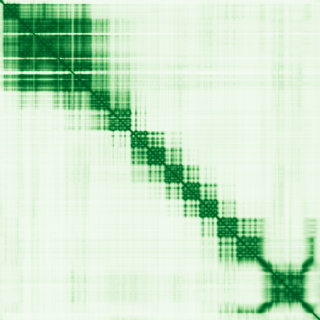
Predicted protein structure

Clinical relevance (Genomics England PanelApp)

Diagnostic Grade (Green)

  • DDG2P

    MONOALLELIC, autosomal or pseudoautosomal, imprinted status unknown
  • Facioscapulohumeral muscular dystrophy - extended testing

    MONOALLELIC, autosomal or pseudoautosomal, imprinted status unknown
  • Fetal anomalies

    MONOALLELIC, autosomal or pseudoautosomal, imprinted status unknown
  • Limb girdle muscular dystrophies, myofibrillar myopathies and distal myopathies

    MONOALLELIC, autosomal or pseudoautosomal, imprinted status unknown
  • Structural eye disease

    MONOALLELIC, autosomal or pseudoautosomal, NOT imprinted
  • Arthrogryposis

  • Congenital muscular dystrophy

    Other
  • Intellectual disability

    MONOALLELIC, autosomal or pseudoautosomal, NOT imprinted

Disease associations (Open Targets)

  • facioscapulohumeral muscular dystrophy 2

    0.81
  • Facioscapulohumeral dystrophy

    0.78
  • arhinia, choanal atresia, and microphthalmia

    0.77
  • Hyposmia - nasal and ocular hypoplasia - hypogonadotropic hypogonadism

    0.69
  • Arrhinia - choanal atresia - microphthalmia

    0.67
  • neurodegenerative disease

    0.49
  • hereditary disease

    0.47
  • Scapulohumeral muscular dystrophy

    0.47
  • Abnormality of the musculature

    0.43
  • Anosmia

    0.42

Score is the Open Targets composite evidence score (0-1). Higher = stronger gene-disease association.

Protein function (UniProt)

Structural maintenance of chromosomes flexible hinge domain-containing protein 1

Non-canonical member of the structural maintenance of chromosomes (SMC) protein family that plays a key role in epigenetic silencing by regulating chromatin architecture (By similarity). Promotes heterochromatin formation in both autosomes and chromosome X, probably by mediating the merge of chromatin compartments (By similarity). Plays a key role in chromosome X inactivation in females by promoting the spreading of heterochromatin (PubMed:23542155). Recruited to inactivated chromosome X by Xist RNA and acts by mediating the merge of chromatin compartments: promotes random chromatin interactions that span the boundaries of existing structures, leading to create a compartment-less architecture typical of inactivated chromosome X (By similarity). Required to facilitate Xist RNA spreading (By similarity). Also required for silencing of a subset of clustered autosomal loci in somatic cells, such as the DUX4 locus (PubMed:23143600). Has ATPase activity; may participate in structural manipulation of chromatin in an ATP-dependent manner as part of its role in gene expression regulation (PubMed:29748383). Also plays a role in DNA repair: localizes to sites of DNA double-strand breaks in response to DNA damage to promote the repair of DNA double-strand breaks (PubMed:24790221, PubMed:25294876). Acts by promoting non-homologous end joining (NHEJ) and inhibiting homologous recombination (HR) repair (PubMed:25294876)

Data sources: HGNC (CC BY 4.0), AlphaFold (CC BY 4.0, Jumper et al. Nature 2021), Genomics England PanelApp (CC BY 4.0), ClinGen, Open Targets (CC0), UniProt.

Not for sole clinical decision-making. Always verify against primary sources.