
AlphaFold predicted structure
SMG8 · Q8ND04
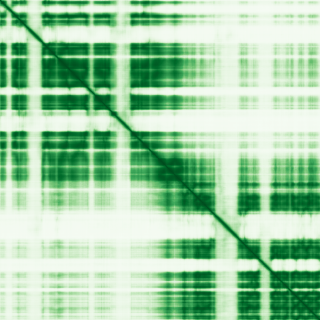
Mean pLDDT
73.9/ 100
Confident
991 residues
Confidence breakdown
- Very high(≥ 90)43%
- Confident(70–90)26%
- Low(50–70)8%
- Very low(< 50)24%
Open interactive 3D viewer
AlphaFold (Jumper et al., 2021) · CC BY 4.0
SMG8 nonsense mediated mRNA decay factor
Annotations refreshed 2 months ago.
Diagnostic Grade (Green)
DDG2P
BIALLELIC, autosomal or pseudoautosomalFetal anomalies
BIALLELIC, autosomal or pseudoautosomalIntellectual disability
BIALLELIC, autosomal or pseudoautosomalSevere microcephaly
BIALLELIC, autosomal or pseudoautosomalStructural eye disease
BIALLELIC, autosomal or pseudoautosomalBilateral congenital or childhood onset cataracts
BIALLELIC, autosomal or pseudoautosomalAlzahrani-Kuwahara syndrome
microcephaly
Abnormal facial shape
short stature due to GHSR deficiency
Intellectual disability
Short stature
neurodegenerative disease
Parkinson disease
lysosomal storage disease
Alzheimer disease
Score is the Open Targets composite evidence score (0-1). Higher = stronger gene-disease association.
Nonsense-mediated mRNA decay factor SMG8
Involved in nonsense-mediated decay (NMD) of mRNAs containing premature stop codons. Is recruited by release factors to stalled ribosomes together with SMG1 and SMG9 (forming the SMG1C protein kinase complex) and, in the SMG1C complex, is required to mediate the recruitment of SMG1 to the ribosome:SURF complex and to suppress SMG1 kinase activity until the ribosome:SURF complex locates the exon junction complex (EJC). Acts as a regulator of kinase activity
Curated MONDO disease pages that list SMG8 among their top associated genes.
SMG8 · Q8ND04
Mean pLDDT
73.9/ 100
Confident
991 residues
Confidence breakdown
AlphaFold (Jumper et al., 2021) · CC BY 4.0