
AlphaFold predicted structure
SNRPE · P62304
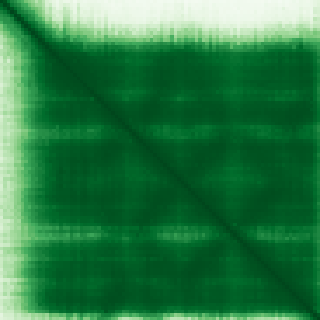
Mean pLDDT
90.8/ 100
Very high
92 residues
Confidence breakdown
- Very high(≥ 90)83%
- Confident(70–90)5%
- Low(50–70)11%
- Very low(< 50)1%
Open interactive 3D viewer
AlphaFold (Jumper et al., 2021) · CC BY 4.0
small nuclear ribonucleoprotein polypeptide E
Annotations refreshed 3 months ago.
Diagnostic Grade (Green)
DDG2P
MONOALLELIC, autosomal or pseudoautosomal, imprinted status unknownEctodermal dysplasia
MONOALLELIC, autosomal or pseudoautosomal, NOT imprintedNon-syndromic hypotrichosis
MONOALLELIC, autosomal or pseudoautosomal, NOT imprintedFetal anomalies
MONOALLELIC, autosomal or pseudoautosomal, NOT imprintedhypotrichosis simplex
Parkinson disease
lysosomal storage disease
Alzheimer disease
neurodegenerative disease
multiple sclerosis
dengue disease
long QT syndrome 1
infection
adrenal cortex carcinoma
Score is the Open Targets composite evidence score (0-1). Higher = stronger gene-disease association.
Small nuclear ribonucleoprotein E
Plays a role in pre-mRNA splicing as a core component of the spliceosomal U1, U2, U4 and U5 small nuclear ribonucleoproteins (snRNPs), the building blocks of the spliceosome (PubMed:11991638, PubMed:18984161, PubMed:19325628, PubMed:23246290, PubMed:23333303, PubMed:25555158, PubMed:26912367, PubMed:28076346, PubMed:28502770, PubMed:28781166, PubMed:32494006). Component of both the pre-catalytic spliceosome B complex and activated spliceosome C complexes (PubMed:11991638, PubMed:28076346, PubMed:28502770, PubMed:28781166). As a component of the minor spliceosome, involved in the splicing of U12-type introns in pre-mRNAs (PubMed:15146077). As part of the U7 snRNP it is involved in histone 3'-end processing (PubMed:12975319)
SNRPE · P62304
Mean pLDDT
90.8/ 100
Very high
92 residues
Confidence breakdown
AlphaFold (Jumper et al., 2021) · CC BY 4.0