Skip to content
GenoLensGenoLens

SNX14

Chr 6q14.3

sorting nexin 14

Aliases:
RGS-PX2
MANE:
ENST00000314673.8

Annotations refreshed 1 month ago.

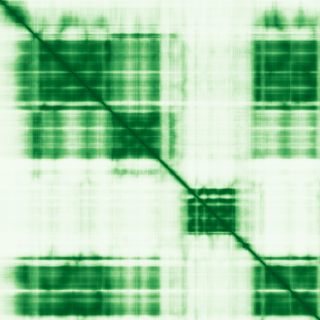
Predicted protein structure

Clinical relevance (Genomics England PanelApp)

Diagnostic Grade (Green)

  • Ataxia and cerebellar anomalies - narrow panel

    BIALLELIC, autosomal or pseudoautosomal
  • Cerebellar hypoplasia

    BIALLELIC, autosomal or pseudoautosomal
  • DDG2P

    BIALLELIC, autosomal or pseudoautosomal
  • Fetal anomalies

    BIALLELIC, autosomal or pseudoautosomal
  • Hereditary ataxia

    BIALLELIC, autosomal or pseudoautosomal
  • Hereditary ataxia with onset in adulthood

    BIALLELIC, autosomal or pseudoautosomal
  • Intellectual disability

    BIALLELIC, autosomal or pseudoautosomal
  • Childhood onset dystonia, chorea or related movement disorder

    BIALLELIC, autosomal or pseudoautosomal

+1 more panels — install the extension to see the full list inline on any page.

Disease associations (Open Targets)

  • autosomal recessive spinocerebellar ataxia 20

    0.79
  • Intellectual disability-coarse face-macrocephaly-cerebellar hypotrophy syndrome

    0.73
  • Abnormality of the skeletal system

    0.53
  • Spinocerebellar atrophy

    0.34
  • neurodegenerative disease

    0.32
  • neurodevelopmental disorder

    0.30
  • cerebellar ataxia

    0.27
  • Abnormal brain morphology

    0.27
  • Seizure

    0.26
  • Global developmental delay

    0.26

Score is the Open Targets composite evidence score (0-1). Higher = stronger gene-disease association.

Protein function (UniProt)

Sorting nexin-14

Plays a role in maintaining normal neuronal excitability and synaptic transmission. May be involved in several stages of intracellular trafficking (By similarity). Required for autophagosome clearance, possibly by mediating the fusion of lysosomes with autophagosomes (Probable). Binds phosphatidylinositol 3,5-bisphosphate (PtdIns(3,5)P2), a key component of late endosomes/lysosomes (PubMed:25848753). Does not bind phosphatidylinositol 3-phosphate (PtdIns(3P)) (PubMed:25148684, PubMed:25848753)

Data sources: HGNC (CC BY 4.0), AlphaFold (CC BY 4.0, Jumper et al. Nature 2021), Genomics England PanelApp (CC BY 4.0), ClinGen, Open Targets (CC0), UniProt.

Not for sole clinical decision-making. Always verify against primary sources.