Skip to content
GenoLensGenoLens

SNX27

Chr 1q21.3

sorting nexin 27

Aliases:
MY014, KIAA0488, MGC20471
MANE:
ENST00000458013.7

Annotations refreshed 9 hours ago.

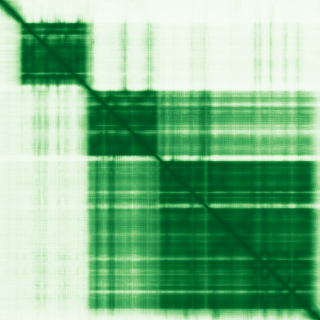
Predicted protein structure

Clinical relevance (Genomics England PanelApp)

Diagnostic Grade (Green)

  • Intellectual disability

    BIALLELIC, autosomal or pseudoautosomal
  • Early onset or syndromic epilepsy

    BIALLELIC, autosomal or pseudoautosomal

Disease associations (Open Targets)

  • Dravet syndrome

    0.55
  • Global developmental delay

    0.42
  • Intellectual disability

    0.42
  • Generalized hypotonia

    0.42
  • Seizure

    0.42
  • atopic eczema

    0.22
  • hereditary disease

    0.19
  • hepatocellular carcinoma

    0.08
  • Down syndrome

    0.08
  • nerve plexus disorder

    0.07

Score is the Open Targets composite evidence score (0-1). Higher = stronger gene-disease association.

Protein function (UniProt)

Sorting nexin-27

Involved in the retrograde transport from endosome to plasma membrane, a trafficking pathway that promotes the recycling of internalized transmembrane proteins. Following internalization, endocytosed transmembrane proteins are delivered to early endosomes and recycled to the plasma membrane instead of being degraded in lysosomes. SNX27 specifically binds and directs sorting of a subset of transmembrane proteins containing a PDZ-binding motif at the C-terminus: following interaction with target transmembrane proteins, associates with the retromer complex, preventing entry into the lysosomal pathway, and promotes retromer-tubule based plasma membrane recycling. SNX27 also binds with the WASH complex. Interacts with membranes containing phosphatidylinositol-3-phosphate (PtdIns(3P)). May participate in establishment of natural killer cell polarity. Recruits CYTIP to early endosomes

Data sources: HGNC (CC BY 4.0), AlphaFold (CC BY 4.0, Jumper et al. Nature 2021), Genomics England PanelApp (CC BY 4.0), ClinGen, Open Targets (CC0), UniProt.

Not for sole clinical decision-making. Always verify against primary sources.