
AlphaFold predicted structure
SORD · Q00796
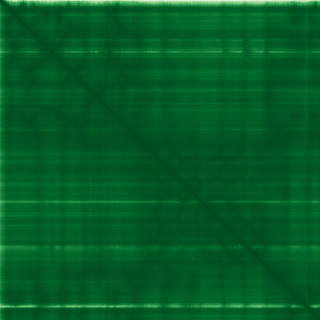
Mean pLDDT
98.0/ 100
Very high
357 residues
Confidence breakdown
- Very high(≥ 90)98%
- Confident(70–90)2%
- Low(50–70)0%
- Very low(< 50)0%
Open interactive 3D viewer
AlphaFold (Jumper et al., 2021) · CC BY 4.0
sorbitol dehydrogenase
Annotations refreshed 3 months ago.
Diagnostic Grade (Green)
Hereditary neuropathy
BIALLELIC, autosomal or pseudoautosomalHereditary neuropathy or pain disorder
BIALLELIC, autosomal or pseudoautosomalAdult onset neurodegenerative disorder
BIALLELIC, autosomal or pseudoautosomalneuronopathy, distal hereditary motor, autosomal recessive 8
hereditary disease
Charcot-Marie-Tooth disease
neuromuscular disease
Iron deficiency anemia
benign neoplasm of eye
ovarian neoplasm
tumor of meninges
early-onset non-syndromic cataract
Total congenital cataract
Score is the Open Targets composite evidence score (0-1). Higher = stronger gene-disease association.
Sorbitol dehydrogenase
Polyol dehydrogenase that catalyzes the reversible NAD(+)-dependent oxidation of various sugar alcohols. Is mostly active with D-sorbitol (D-glucitol), L-threitol, xylitol and ribitol as substrates, leading to the C2-oxidized products D-fructose, L-erythrulose, D-xylulose, and D-ribulose, respectively (PubMed:3365415). Is a key enzyme in the polyol pathway that interconverts glucose and fructose via sorbitol, which constitutes an important alternate route for glucose metabolism. The polyol pathway is believed to be involved in the etiology of diabetic complications, such as diabetic neuropathy and retinopathy, induced by hyperglycemia (PubMed:12962626, PubMed:25105142, PubMed:29966615). May play a role in sperm motility by using sorbitol as an alternative energy source for sperm motility (PubMed:16278369). May have a more general function in the metabolism of secondary alcohols since it also catalyzes the stereospecific oxidation of (2R,3R)-2,3-butanediol. To a lesser extent, can also oxidize L-arabinitol, galactitol and D-mannitol and glycerol in vitro. Oxidizes neither ethanol nor other primary alcohols. Cannot use NADP(+) as the electron acceptor (PubMed:3365415)
SORD · Q00796
Mean pLDDT
98.0/ 100
Very high
357 residues
Confidence breakdown
AlphaFold (Jumper et al., 2021) · CC BY 4.0