Skip to content
GenoLensGenoLens

SPG7

Chr 16q24.3

SPG7 matrix AAA peptidase subunit, paraplegin

Aliases:
CAR, SPG5C
MANE:
ENST00000645818.2

Annotations refreshed 1 month ago.

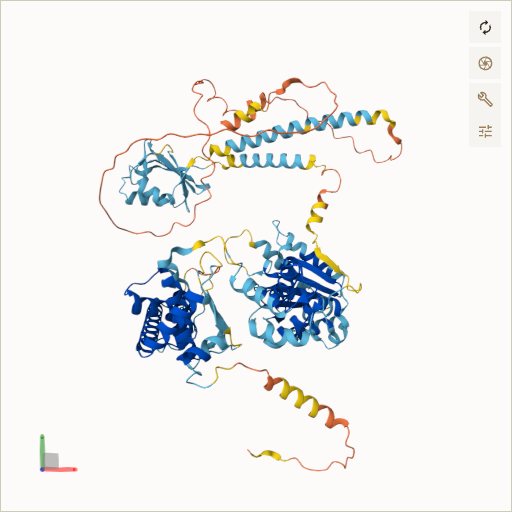
Predicted protein structure

Clinical relevance (Genomics England PanelApp)

Diagnostic Grade (Green)

  • Adult onset hereditary spastic paraplegia

    BOTH monoallelic and biallelic (but BIALLELIC mutations cause a more SEVERE disease form), autosomal or pseudoautosomal
  • Adult onset neurodegenerative disorder

    BOTH monoallelic and biallelic (but BIALLELIC mutations cause a more SEVERE disease form), autosomal or pseudoautosomal
  • Ataxia and cerebellar anomalies - narrow panel

    BOTH monoallelic and biallelic (but BIALLELIC mutations cause a more SEVERE disease form), autosomal or pseudoautosomal
  • Childhood onset hereditary spastic paraplegia

    BOTH monoallelic and biallelic (but BIALLELIC mutations cause a more SEVERE disease form), autosomal or pseudoautosomal
  • Hereditary ataxia

    BOTH monoallelic and biallelic (but BIALLELIC mutations cause a more SEVERE disease form), autosomal or pseudoautosomal
  • Hereditary ataxia with onset in adulthood

    BOTH monoallelic and biallelic (but BIALLELIC mutations cause a more SEVERE disease form), autosomal or pseudoautosomal
  • Hereditary neuropathy or pain disorder

    BOTH monoallelic and biallelic (but BIALLELIC mutations cause a more SEVERE disease form), autosomal or pseudoautosomal
  • Hereditary spastic paraplegia

    BOTH monoallelic and biallelic (but BIALLELIC mutations cause a more SEVERE disease form), autosomal or pseudoautosomal

+12 more panels — install the extension to see the full list inline on any page.

Disease associations (Open Targets)

  • Autosomal recessive spastic paraplegia type 7

    0.84
  • hereditary spastic paraplegia 7

    0.81
  • hereditary spastic paraplegia

    0.59
  • hereditary disease

    0.53
  • Spastic paraplegia

    0.52
  • mitochondrial disease

    0.51
  • spastic ataxia

    0.50
  • hereditary ataxia

    0.50
  • Retinal dystrophy

    0.49
  • Gait ataxia

    0.46

Score is the Open Targets composite evidence score (0-1). Higher = stronger gene-disease association.

Protein function (UniProt)

Mitochondrial inner membrane m-AAA protease component paraplegin

Catalytic component of the m-AAA protease, a protease that plays a key role in proteostasis of inner mitochondrial membrane proteins, and which is essential for axonal and neuron development (PubMed:11549317, PubMed:28396416, PubMed:31097542, PubMed:9635427). SPG7 possesses both ATPase and protease activities: the ATPase activity is required to unfold substrates, threading them into the internal proteolytic cavity for hydrolysis into small peptide fragments (By similarity). The m-AAA protease exerts a dual role in the mitochondrial inner membrane: it mediates the processing of specific regulatory proteins and ensures protein quality control by degrading misfolded polypeptides (By similarity). Mediates protein maturation of the mitochondrial ribosomal subunit MRPL32/bL32m by catalyzing the cleavage of the presequence of MRPL32/bL32m prior to assembly into the mitochondrial ribosome (By similarity). Acts as a regulator of calcium in neurons by mediating degradation of SMDT1/EMRE before its assembly with the uniporter complex, limiting the availability of SMDT1/EMRE for MCU assembly and promoting efficient assembly of gatekeeper subunits with MCU (PubMed:28396416, PubMed:31097542). Also regulates mitochondrial calcium by catalyzing degradation of MCU (PubMed:31097542). Plays a role in the formation and regulation of the mitochondrial permeability transition pore (mPTP) and its proteolytic activity is dispensable for this function (PubMed:26387735)

Data sources: HGNC (CC BY 4.0), AlphaFold (CC BY 4.0, Jumper et al. Nature 2021), Genomics England PanelApp (CC BY 4.0), ClinGen, Open Targets (CC0), UniProt.

Not for sole clinical decision-making. Always verify against primary sources.