
AlphaFold predicted structure
SPI1 · P17947
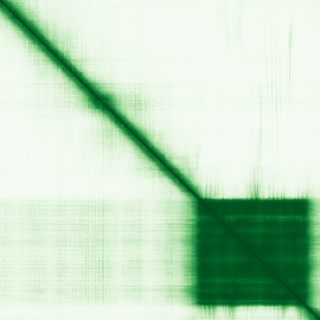
Mean pLDDT
65.5/ 100
Low
270 residues
Confidence breakdown
- Very high(≥ 90)33%
- Confident(70–90)2%
- Low(50–70)28%
- Very low(< 50)38%
Open interactive 3D viewer
AlphaFold (Jumper et al., 2021) · CC BY 4.0
Spi-1 proto-oncogene
Annotations refreshed 2 months ago.
Diagnostic Grade (Green)
Primary immunodeficiency or monogenic inflammatory bowel disease
MONOALLELIC, autosomal or pseudoautosomal, NOT imprintedagammaglobulinemia 10, autosomal dominant
agammaglobulinemia
neurodegenerative disease
Alzheimer disease
autosomal agammaglobulinemia
multiple sclerosis
Parkinson disease
lysosomal storage disease
hypertensive disorder
acute myeloid leukemia
Score is the Open Targets composite evidence score (0-1). Higher = stronger gene-disease association.
Transcription factor PU.1
Pioneer transcription factor, which controls hematopoietic cell fate by decompacting stem cell heterochromatin and allowing other transcription factors to enter otherwise inaccessible genomic sites. Once in open chromatin, can directly control gene expression by binding genetic regulatory elements and can also more broadly influence transcription by recruiting transcription factors, such as interferon regulatory factors (IRFs), to otherwise inaccessible genomic regions (PubMed:23658224, PubMed:33951726). Transcriptionally activates genes important for myeloid and lymphoid lineages, such as CSF1R (By similarity). Transcriptional activation from certain promoters, possibly containing low affinity binding sites, is achieved cooperatively with other transcription factors. FCER1A transactivation is achieved in cooperation with GATA1 (By similarity). May be particularly important for the pro- to pre-B cell transition (PubMed:33951726). Binds (via the ETS domain) onto the purine-rich DNA core sequence 5'-GAGGAA-3', also known as the PU-box (PubMed:33951726). In vitro can bind RNA and interfere with pre-mRNA splicing (By similarity)
SPI1 · P17947
Mean pLDDT
65.5/ 100
Low
270 residues
Confidence breakdown
AlphaFold (Jumper et al., 2021) · CC BY 4.0