Skip to content
GenoLensGenoLens

SPTLC2

Chr 14q24.3

serine palmitoyltransferase long chain base subunit 2

Aliases:
KIAA0526, LCB2, LCB2A, hLCB2a
MANE:
ENST00000216484.7

Annotations refreshed 1 month ago.

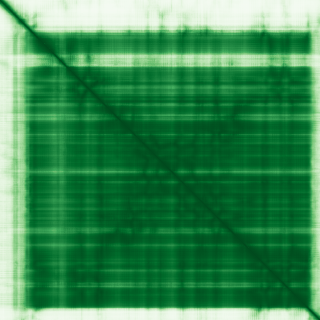
Predicted protein structure

Clinical relevance (Genomics England PanelApp)

Diagnostic Grade (Green)

  • Adult onset neurodegenerative disorder

    MONOALLELIC, autosomal or pseudoautosomal, NOT imprinted
  • DDG2P

    MONOALLELIC, autosomal or pseudoautosomal, imprinted status unknown
  • Familial dysautonomia

    MONOALLELIC, autosomal or pseudoautosomal, NOT imprinted
  • Hereditary neuropathy

    MONOALLELIC, autosomal or pseudoautosomal, imprinted status unknown
  • Hereditary neuropathy or pain disorder

    MONOALLELIC, autosomal or pseudoautosomal, imprinted status unknown
  • Likely inborn error of metabolism

    MONOALLELIC, autosomal or pseudoautosomal, NOT imprinted
  • Pain syndromes

    MONOALLELIC, autosomal or pseudoautosomal, imprinted status unknown
  • Undiagnosed metabolic disorders

    MONOALLELIC, autosomal or pseudoautosomal, NOT imprinted

+5 more panels — install the extension to see the full list inline on any page.

Disease associations (Open Targets)

  • hereditary sensory and autonomic neuropathy type 1

    0.77
  • neurodegenerative disease

    0.56
  • Charcot-Marie-Tooth disease

    0.49
  • Familial dysautonomia

    0.46
  • Riley-Day syndrome

    0.46
  • amyotrophic lateral sclerosis

    0.39
  • Alzheimer disease

    0.38
  • hereditary sensory and autonomic neuropathy

    0.37
  • Parkinson disease

    0.37
  • multiple sclerosis

    0.37

Score is the Open Targets composite evidence score (0-1). Higher = stronger gene-disease association.

Protein function (UniProt)

Serine palmitoyltransferase 2

Component of the serine palmitoyltransferase multisubunit enzyme (SPT) that catalyzes the initial and rate-limiting step in sphingolipid biosynthesis by condensing L-serine and activated acyl-CoA (most commonly palmitoyl-CoA) to form long-chain bases (PubMed:19416851, PubMed:19648650, PubMed:20504773, PubMed:20920666). The SPT complex is composed of SPTLC1, SPTLC2 or SPTLC3 and SPTSSA or SPTSSB. Within this complex, the heterodimer consisting of SPTLC1 and SPTLC2/SPTLC3 forms the catalytic core (PubMed:19416851). The composition of the serine palmitoyltransferase (SPT) complex determines the substrate preference (PubMed:19416851). The SPTLC1-SPTLC2-SPTSSA complex shows a strong preference for C16-CoA substrate, while the SPTLC1-SPTLC3-SPTSSA isozyme uses both C14-CoA and C16-CoA as substrates, with a slight preference for C14-CoA (PubMed:19416851, PubMed:19648650). The SPTLC1-SPTLC2-SPTSSB complex shows a strong preference for C18-CoA substrate, while the SPTLC1-SPTLC3-SPTSSB isozyme displays an ability to use a broader range of acyl-CoAs, without apparent preference (PubMed:19416851, PubMed:19648650). Crucial for adipogenesis (By similarity)

Data sources: HGNC (CC BY 4.0), AlphaFold (CC BY 4.0, Jumper et al. Nature 2021), Genomics England PanelApp (CC BY 4.0), ClinGen, Open Targets (CC0), UniProt.

Not for sole clinical decision-making. Always verify against primary sources.