Skip to content
GenoLensGenoLens

SRSF1

Chr 17q22

serine and arginine rich splicing factor 1

Aliases:
ASF, SF2, SRp30a, SF2p33, MGC5228
MANE:
ENST00000258962.5

Annotations refreshed 1 month ago.

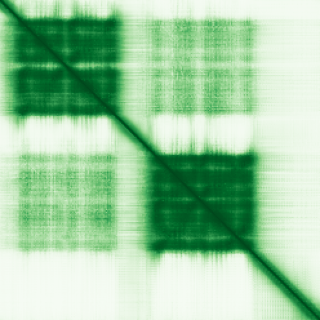
Predicted protein structure

Clinical relevance (Genomics England PanelApp)

Diagnostic Grade (Green)

  • Intellectual disability

    MONOALLELIC, autosomal or pseudoautosomal, NOT imprinted
  • DDG2P

    MONOALLELIC, autosomal or pseudoautosomal, imprinted status unknown

Disease associations (Open Targets)

  • neurodevelopmental disorder with dysmorphic facies and behavioral abnormalities

    0.62
  • Neurodevelopmental delay

    0.54
  • Intellectual disability

    0.53
  • neurodegenerative disease

    0.50
  • hereditary disease

    0.44
  • dengue disease

    0.37
  • hypothyroidism

    0.14
  • frozen shoulder

    0.13
  • autism spectrum disorder

    0.12
  • hepatocellular carcinoma

    0.11

Score is the Open Targets composite evidence score (0-1). Higher = stronger gene-disease association.

Protein function (UniProt)

Serine/arginine-rich splicing factor 1

Plays a role in preventing exon skipping, ensuring the accuracy of splicing and regulating alternative splicing. Interacts with other spliceosomal components, via the RS domains, to form a bridge between the 5'- and 3'-splice site binding components, U1 snRNP and U2AF. Can stimulate binding of U1 snRNP to a 5'-splice site-containing pre-mRNA. Binds to purine-rich RNA sequences, either the octamer, 5'-RGAAGAAC-3' (r=A or G) or the decamers, AGGACAGAGC/AGGACGAAGC. Binds preferentially to the 5'-CGAGGCG-3' motif in vitro. Three copies of the octamer constitute a powerful splicing enhancer in vitro, the ASF/SF2 splicing enhancer (ASE) which can specifically activate ASE-dependent splicing. Isoform ASF-2 and isoform ASF-3 act as splicing repressors. May function as export adapter involved in mRNA nuclear export through the TAP/NXF1 pathway

Data sources: HGNC (CC BY 4.0), AlphaFold (CC BY 4.0, Jumper et al. Nature 2021), Genomics England PanelApp (CC BY 4.0), ClinGen, Open Targets (CC0), UniProt.

Not for sole clinical decision-making. Always verify against primary sources.