
AlphaFold predicted structure
ST14 · Q9Y5Y6
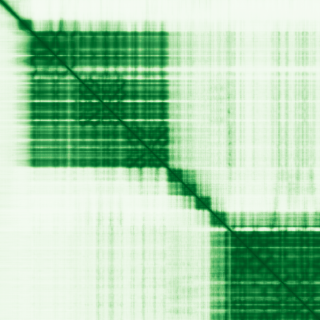
Mean pLDDT
80.9/ 100
Confident
855 residues
Confidence breakdown
- Very high(≥ 90)34%
- Confident(70–90)47%
- Low(50–70)12%
- Very low(< 50)7%
Open interactive 3D viewer
AlphaFold (Jumper et al., 2021) · CC BY 4.0
ST14 transmembrane serine protease matriptase
Annotations refreshed 2 months ago.
Diagnostic Grade (Green)
Autosomal recessive congenital ichthyosis
BIALLELIC, autosomal or pseudoautosomalDDG2P
BIALLELIC, autosomal or pseudoautosomalEctodermal dysplasia
BIALLELIC, autosomal or pseudoautosomalFetal anomalies
BIALLELIC, autosomal or pseudoautosomalIchthyosis and erythrokeratoderma
BIALLELIC, autosomal or pseudoautosomalFamilial cicatricial alopecia
BIALLELIC, autosomal or pseudoautosomalPalmoplantar keratodermas
BIALLELIC, autosomal or pseudoautosomalIchthyosis-hypotrichosis syndrome
autosomal recessive congenital ichthyosis 11
Abnormality of the skeletal system
ovarian neoplasm
benign neoplasm of pituitary gland
ichthyosis
hereditary disease
breast cancer
breast carcinoma
myopia
Score is the Open Targets composite evidence score (0-1). Higher = stronger gene-disease association.
Suppressor of tumorigenicity 14 protein
Exhibits trypsin-like activity as defined by cleavage of synthetic substrates with Arg or Lys as the P1 site (PubMed:10373424). Involved in the terminal differentiation of keratinocytes through prostasin (PRSS8) activation and filaggrin (FLG) processing (PubMed:18843291). Proteolytically cleaves and therefore activates TMPRSS13 (PubMed:28710277)
ST14 · Q9Y5Y6
Mean pLDDT
80.9/ 100
Confident
855 residues
Confidence breakdown
AlphaFold (Jumper et al., 2021) · CC BY 4.0