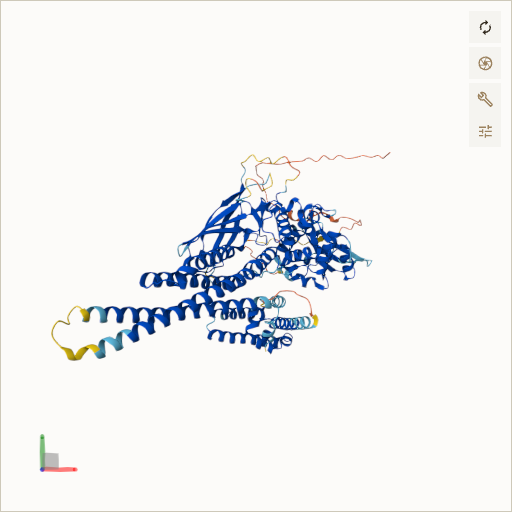
Signal transducer and activator of transcription 3
Signal transducer and transcription activator that mediates cellular responses to interleukins, KITLG/SCF, LEP and other growth factors (PubMed:10688651, PubMed:11294841, PubMed:12359225, PubMed:12873986, PubMed:15194700, PubMed:15653507, PubMed:16285960, PubMed:17344214, PubMed:18242580, PubMed:18782771, PubMed:22306293, PubMed:23084476, PubMed:28262505, PubMed:32929201, PubMed:38404237). Once activated, recruits coactivators, such as NCOA1 or MED1, to the promoter region of the target gene (PubMed:15653507, PubMed:16285960, PubMed:17344214, PubMed:18782771, PubMed:28262505, PubMed:32929201). May mediate cellular responses to activated FGFR1, FGFR2, FGFR3 and FGFR4 (PubMed:12873986). Upon activation of IL6ST/gp130 signaling by interleukin-6 (IL6), binds to the IL6-responsive elements identified in the promoters of various acute-phase protein genes (PubMed:12359225). Activated by IL31 through IL31RA (PubMed:15194700). Acts as a regulator of inflammatory response by regulating differentiation of naive CD4(+) T-cells into T-helper Th17 or regulatory T-cells (Treg): acetylation promotes its transcription activity and cell differentiation while deacetylation and oxidation of lysine residues by LOXL3 inhibits differentiation (PubMed:28065600, PubMed:28262505). Involved in cell cycle regulation by inducing the expression of key genes for the progression from G1 to S phase, such as CCND1 (PubMed:17344214). Mediates the effects of LEP on melanocortin production, body energy homeostasis and lactation (By similarity). May play an apoptotic role by transctivating BIRC5 expression under LEP activation (PubMed:18242580). Cytoplasmic STAT3 represses macroautophagy by inhibiting EIF2AK2/PKR activity (PubMed:23084476). Plays a crucial role in basal beta cell functions, such as regulation of insulin secretion (By similarity). Following JAK/STAT signaling activation and as part of a complex with NFATC3 and NFATC4, binds to the alpha-beta E4 promoter region of CRYAB and activates transcription in cardiomyocytes (By similarity). Involved in the oncostatin-M-mediated signaling pathway through both type I OSM receptor complex (heterodimers composed of LIFR and IL6ST) and type II OSM receptor complex (heterodimers composed of OSMR and IL6ST) (PubMed:9188471)