
AlphaFold predicted structure
STEAP3 · Q658P3
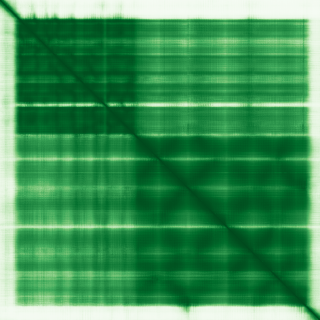
Mean pLDDT
89.2/ 100
Confident
488 residues
Confidence breakdown
- Very high(≥ 90)82%
- Confident(70–90)8%
- Low(50–70)2%
- Very low(< 50)9%
Open interactive 3D viewer
AlphaFold (Jumper et al., 2021) · CC BY 4.0
STEAP3 metalloreductase
Annotations refreshed 2 months ago.
Moderate Evidence (Amber)
Iron metabolism disorders - NOT common HFE mutations
MONOALLELIC, autosomal or pseudoautosomal, imprinted status unknownRare anaemia
severe congenital hypochromic anemia with ringed sideroblasts
ovarian neoplasm
autoimmune thyroid disease
trauma complication
ocular hypotension
bone remodeling disease
hypochromic anemia
primary ciliary dyskinesia
Abnormal nasolacrimal system morphology
central nervous system cancer
Score is the Open Targets composite evidence score (0-1). Higher = stronger gene-disease association.
Metalloreductase STEAP3
Integral membrane protein that functions as a NADPH-dependent ferric-chelate reductase, using NADPH from one side of the membrane to reduce a Fe(3+) chelate that is bound on the other side of the membrane (PubMed:26205815). Mediates sequential transmembrane electron transfer from NADPH to FAD and onto heme, and finally to the Fe(3+) chelate (By similarity). Can also reduce Cu(2+) to Cu(1+) (By similarity). Mediates efficient transferrin-dependent iron uptake in erythroid cells (By similarity). May play a role downstream of p53/TP53 to interface apoptosis and cell cycle progression (By similarity). Indirectly involved in exosome secretion by facilitating the secretion of proteins such as TCTP (PubMed:15319436, PubMed:16651434)
STEAP3 · Q658P3
Mean pLDDT
89.2/ 100
Confident
488 residues
Confidence breakdown
AlphaFold (Jumper et al., 2021) · CC BY 4.0