
AlphaFold predicted structure
STIM1 · Q13586
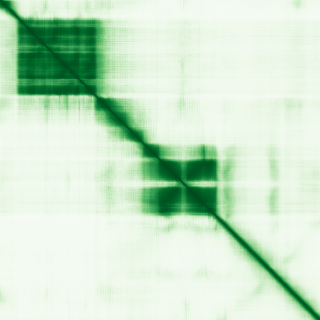
Mean pLDDT
67.8/ 100
Low
685 residues
Confidence breakdown
- Very high(≥ 90)22%
- Confident(70–90)34%
- Low(50–70)10%
- Very low(< 50)34%
Open interactive 3D viewer
AlphaFold (Jumper et al., 2021) · CC BY 4.0
stromal interaction molecule 1
Annotations refreshed 2 months ago.
Diagnostic Grade (Green)
Amelogenesis imperfecta
BIALLELIC, autosomal or pseudoautosomalArthrogryposis
MONOALLELIC, autosomal or pseudoautosomal, NOT imprintedBleeding and platelet disorders
MONOALLELIC, autosomal or pseudoautosomal, imprinted status unknownCongenital myopathy
MONOALLELIC, autosomal or pseudoautosomal, imprinted status unknownCOVID-19 research
BIALLELIC, autosomal or pseudoautosomalInherited bleeding disorders
MONOALLELIC, autosomal or pseudoautosomal, imprinted status unknownLimb girdle muscular dystrophies, myofibrillar myopathies and distal myopathies
MONOALLELIC, autosomal or pseudoautosomal, imprinted status unknownPrimary immunodeficiency or monogenic inflammatory bowel disease
BIALLELIC, autosomal or pseudoautosomal+4 more panels — install the extension to see the full list inline on any page.
myopathy, tubular aggregate, 1
combined immunodeficiency due to STIM1 deficiency
Stormorken syndrome
tubular aggregate myopathy
Stormorken-Sjaastad-Langslet syndrome
combined immunodeficiency due to CRAC channel dysfunction
severe combined immunodeficiency
combined immunodeficiency
T-B- severe combined immunodeficiency
T-B+ severe combined immunodeficiency
Score is the Open Targets composite evidence score (0-1). Higher = stronger gene-disease association.
Stromal interaction molecule 1
Acts as a Ca(2+) sensor that gates two major inward rectifying Ca(2+) channels at the plasma membrane: Ca(2+) release-activated Ca(2+) (CRAC) channels and arachidonate-regulated Ca(2+)-selective (ARC) channels (PubMed:15866891, PubMed:16005298, PubMed:16208375, PubMed:16537481, PubMed:16733527, PubMed:16766533, PubMed:16807233, PubMed:18854159, PubMed:19182790, PubMed:19249086, PubMed:19622606, PubMed:19706554, PubMed:22464749, PubMed:24069340, PubMed:24351972, PubMed:24591628, PubMed:25326555, PubMed:26322679, PubMed:28219928, PubMed:32415068). Plays a role in mediating store-operated Ca(2+) entry (SOCE), a Ca(2+) influx following depletion of intracellular Ca(2+) stores. Upon Ca(2+) depletion, translocates from the endoplasmic reticulum to the plasma membrane where it activates CRAC channel pore-forming subunits ORA1, ORA2 and ORAI3 to generate sustained and oscillatory Ca(2+) entry (PubMed:16208375, PubMed:16537481, PubMed:32415068). Involved in enamel formation (PubMed:24621671). Plays a role in regulating the type I interferon response by retaining the signaling adapter STING at the endoplasmic reticulum (PubMed:30643259)
STIM1 · Q13586
Mean pLDDT
67.8/ 100
Low
685 residues
Confidence breakdown
AlphaFold (Jumper et al., 2021) · CC BY 4.0