
AlphaFold predicted structure
STK4 · Q13043
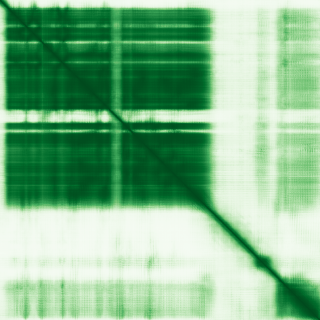
Mean pLDDT
75.9/ 100
Confident
487 residues
Confidence breakdown
- Very high(≥ 90)49%
- Confident(70–90)19%
- Low(50–70)8%
- Very low(< 50)24%
Open interactive 3D viewer
AlphaFold (Jumper et al., 2021) · CC BY 4.0
serine/threonine kinase 4
Annotations refreshed 3 months ago.
Diagnostic Grade (Green)
COVID-19 research
BIALLELIC, autosomal or pseudoautosomalPrimary immunodeficiency or monogenic inflammatory bowel disease
BIALLELIC, autosomal or pseudoautosomalCytopenia - NOT Fanconi anaemia
UnknownFetal anomalies
BIALLELIC, autosomal or pseudoautosomalPaediatric disorders - additional genes
BIALLELIC, autosomal or pseudoautosomalcombined immunodeficiency due to STK4 deficiency
severe combined immunodeficiency
combined immunodeficiency
combined immunodeficiency due to DOCK8 deficiency
immunodeficiency disease
neurodegenerative disease
autoimmune disorder of central nervous system
hereditary disease
bipolar disorder
bipolar I disorder
Score is the Open Targets composite evidence score (0-1). Higher = stronger gene-disease association.
Serine/threonine-protein kinase 4
Stress-activated, pro-apoptotic kinase which, following caspase-cleavage, enters the nucleus and induces chromatin condensation followed by internucleosomal DNA fragmentation. Key component of the Hippo signaling pathway which plays a pivotal role in organ size control and tumor suppression by restricting proliferation and promoting apoptosis. The core of this pathway is composed of a kinase cascade wherein STK3/MST2 and STK4/MST1, in complex with its regulatory protein SAV1, phosphorylates and activates LATS1/2 in complex with its regulatory protein MOB1, which in turn phosphorylates and inactivates YAP1 oncoprotein and WWTR1/TAZ. Phosphorylation of YAP1 by LATS2 inhibits its translocation into the nucleus to regulate cellular genes important for cell proliferation, cell death, and cell migration. STK3/MST2 and STK4/MST1 are required to repress proliferation of mature hepatocytes, to prevent activation of facultative adult liver stem cells (oval cells), and to inhibit tumor formation (By similarity). Phosphorylates 'Ser-14' of histone H2B (H2BS14ph) during apoptosis. Phosphorylates FOXO3 upon oxidative stress, which results in its nuclear translocation and cell death initiation. Phosphorylates MOBKL1A, MOBKL1B and RASSF2. Phosphorylates TNNI3 (cardiac Tn-I) and alters its binding affinity to TNNC1 (cardiac Tn-C) and TNNT2 (cardiac Tn-T). Phosphorylates FOXO1 on 'Ser-212' and regulates its activation and stimulates transcription of PMAIP1 in a FOXO1-dependent manner. Phosphorylates SIRT1 and inhibits SIRT1-mediated p53/TP53 deacetylation, thereby promoting p53/TP53 dependent transcription and apoptosis upon DNA damage. Acts as an inhibitor of PKB/AKT1. Phosphorylates AR on 'Ser-650' and suppresses its activity by intersecting with PKB/AKT1 signaling and antagonizing formation of AR-chromatin complexes
STK4 · Q13043
Mean pLDDT
75.9/ 100
Confident
487 residues
Confidence breakdown
AlphaFold (Jumper et al., 2021) · CC BY 4.0