
AlphaFold predicted structure
STN1 · Q9H668
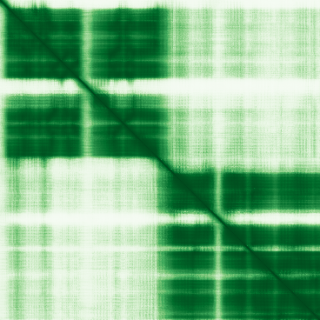
Mean pLDDT
87.1/ 100
Confident
368 residues
Confidence breakdown
- Very high(≥ 90)66%
- Confident(70–90)21%
- Low(50–70)7%
- Very low(< 50)6%
Open interactive 3D viewer
AlphaFold (Jumper et al., 2021) · CC BY 4.0
STN1 subunit of CST complex
Annotations refreshed 2 months ago.
Diagnostic Grade (Green)
Childhood onset hereditary spastic paraplegia
BIALLELIC, autosomal or pseudoautosomalCOVID-19 research
BIALLELIC, autosomal or pseudoautosomalCytopenia - NOT Fanconi anaemia
BIALLELIC, autosomal or pseudoautosomalDDG2P
BIALLELIC, autosomal or pseudoautosomalHaematological malignancies cancer susceptibility
MONOALLELIC, autosomal or pseudoautosomal, imprinted status unknownHaematological malignancies for rare disease
MONOALLELIC, autosomal or pseudoautosomal, imprinted status unknownPaediatric disorders - additional genes
BIALLELIC, autosomal or pseudoautosomalRetinal disorders
BIALLELIC, autosomal or pseudoautosomal+4 more panels — install the extension to see the full list inline on any page.
Coats plus syndrome
uterine corpus leiomyoma
cancer
melanoma
prostate carcinoma
cutaneous melanoma
lung adenocarcinoma
dyskeratosis congenita
acute myeloid leukemia with minimal differentiation
thyroid cancer
Score is the Open Targets composite evidence score (0-1). Higher = stronger gene-disease association.
CST complex subunit STN1
Component of the CST complex proposed to act as a specialized replication factor promoting DNA replication under conditions of replication stress or natural replication barriers such as the telomere duplex. The CST complex binds single-stranded DNA with high affinity in a sequence-independent manner, while isolated subunits bind DNA with low affinity by themselves. Initially the CST complex has been proposed to protect telomeres from DNA degradation (PubMed:19854130). However, the CST complex has been shown to be involved in several aspects of telomere replication. The CST complex inhibits telomerase and is involved in telomere length homeostasis; it is proposed to bind to newly telomerase-synthesized 3' overhangs and to terminate telomerase action implicating the association with the ACD:POT1 complex thus interfering with its telomerase stimulation activity. The CST complex is also proposed to be involved in fill-in synthesis of the telomeric C-strand probably implicating recruitment and activation of DNA polymerase alpha (PubMed:22763445, PubMed:22964711). The CST complex facilitates recovery from many forms of exogenous DNA damage; seems to be involved in the re-initiation of DNA replication at repaired forks and/or dormant origins (PubMed:25483097). Required for efficicient replication of the duplex region of the telomere. Promotes efficient replication of lagging-strand telomeres (PubMed:22863775, PubMed:22964711). Promotes general replication start following replication-fork stalling implicating new origin firing (PubMed:22863775). May be in involved in C-strand fill-in during late S/G2 phase independent of its role in telomere duplex replication (PubMed:23142664)
Curated MONDO disease pages that list STN1 among their top associated genes.
STN1 · Q9H668
Mean pLDDT
87.1/ 100
Confident
368 residues
Confidence breakdown
AlphaFold (Jumper et al., 2021) · CC BY 4.0