
AlphaFold predicted structure
STT3A · P46977
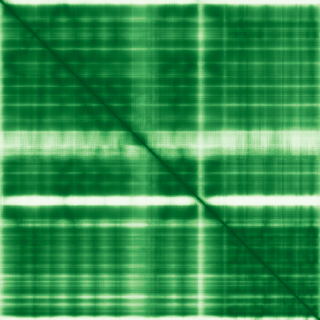
Mean pLDDT
88.3/ 100
Confident
705 residues
Confidence breakdown
- Very high(≥ 90)64%
- Confident(70–90)31%
- Low(50–70)3%
- Very low(< 50)3%
Open interactive 3D viewer
AlphaFold (Jumper et al., 2021) · CC BY 4.0
STT3 oligosaccharyltransferase complex catalytic subunit A
Annotations refreshed 2 months ago.
Diagnostic Grade (Green)
Congenital disorders of glycosylation
BOTH monoallelic and biallelic, autosomal or pseudoautosomalDDG2P
MONOALLELIC, autosomal or pseudoautosomal, imprinted status unknownFetal anomalies
BOTH monoallelic and biallelic, autosomal or pseudoautosomalIntellectual disability
BOTH monoallelic and biallelic, autosomal or pseudoautosomalLikely inborn error of metabolism
BOTH monoallelic and biallelic, autosomal or pseudoautosomalSkeletal dysplasia
MONOALLELIC, autosomal or pseudoautosomal, NOT imprintedChildhood onset dystonia, chorea or related movement disorder
congenital disorder of glycosylation, type Iw, autosomal dominant
STT3A-congenital disorder of glycosylation
dengue disease
COVID-19
Second degree atrioventricular block
actinic keratosis
hereditary disease
oral cavity neoplasm
microcephaly
neoplasm
Score is the Open Targets composite evidence score (0-1). Higher = stronger gene-disease association.
Dolichyl-diphosphooligosaccharide--protein glycosyltransferase subunit STT3A
Catalytic subunit of the oligosaccharyl transferase (OST) complex that catalyzes the initial transfer of a defined glycan (Glc(3)Man(9)GlcNAc(2) in eukaryotes) from the lipid carrier dolichol-pyrophosphate to an asparagine residue within an Asn-X-Ser/Thr consensus motif in nascent polypeptide chains, the first step in protein N-glycosylation (PubMed:19167329, PubMed:31296534, PubMed:31831667, PubMed:34653363, PubMed:38670073, PubMed:39509507). N-glycosylation occurs cotranslationally and the complex associates with the Sec61 complex at the channel-forming translocon complex that mediates protein translocation across the endoplasmic reticulum (ER) (PubMed:19167329, PubMed:31296534, PubMed:31831667, PubMed:34653363, PubMed:38670073, PubMed:39509507). All subunits are required for a maximal enzyme activity (PubMed:19167329, PubMed:31831667, PubMed:34653363). This subunit contains the active site and the acceptor peptide and donor lipid-linked oligosaccharide (LLO) binding pockets (PubMed:19167329). STT3A is present in the majority of OST complexes and mediates cotranslational N-glycosylation of most sites on target proteins, while STT3B-containing complexes are required for efficient post-translational glycosylation and mediate glycosylation of sites that have been skipped by STT3A (PubMed:19167329, PubMed:38670073, PubMed:39509507). STT3A-containing OST-A complex is also required to prevent hyperglycosylation of some target proteins by preventing glycosylation of facultative sites before folding of target proteins is completed (PubMed:39509507)
Curated MONDO disease pages that list STT3A among their top associated genes.
STT3A · P46977
Mean pLDDT
88.3/ 100
Confident
705 residues
Confidence breakdown
AlphaFold (Jumper et al., 2021) · CC BY 4.0