Skip to content
GenoLensGenoLens

SUPT16H

Chr 14q11.2

SPT16 homolog, facilitates chromatin remodeling subunit

Aliases:
FACT, FACTP140, SPT16/CDC68, FLJ14010, FLJ10857
MANE:
ENST00000216297.7

Annotations refreshed 1 month ago.

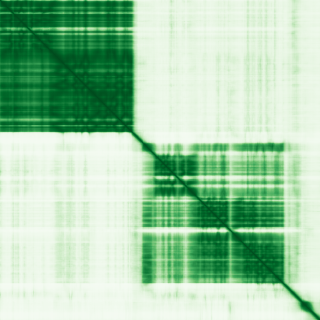
Predicted protein structure

Clinical relevance (Genomics England PanelApp)

Diagnostic Grade (Green)

  • Intellectual disability

    MONOALLELIC, autosomal or pseudoautosomal, imprinted status unknown
  • DDG2P

    MONOALLELIC, autosomal or pseudoautosomal, imprinted status unknown

Disease associations (Open Targets)

  • neurodevelopmental disorder with dysmorphic facies and thin corpus callosum

    0.64
  • HIV infectious disease

    0.58
  • Global developmental delay

    0.37
  • Intellectual disability

    0.37
  • Abnormal corpus callosum morphology

    0.37
  • neurodegenerative disease

    0.31
  • mathematical ability

    0.22
  • hereditary disease

    0.19
  • ovarian dysfunction

    0.18
  • Abnormality of limbs

    0.18

Score is the Open Targets composite evidence score (0-1). Higher = stronger gene-disease association.

Protein function (UniProt)

FACT complex subunit SPT16

Component of the FACT complex, a general chromatin factor that acts to reorganize nucleosomes. The FACT complex is involved in multiple processes that require DNA as a template such as mRNA elongation, DNA replication and DNA repair. During transcription elongation the FACT complex acts as a histone chaperone that both destabilizes and restores nucleosomal structure. It facilitates the passage of RNA polymerase II and transcription by promoting the dissociation of one histone H2A-H2B dimer from the nucleosome, then subsequently promotes the reestablishment of the nucleosome following the passage of RNA polymerase II. The FACT complex is probably also involved in phosphorylation of 'Ser-392' of p53/TP53 via its association with CK2 (casein kinase II)

Curated MONDO disease pages that list SUPT16H among their top associated genes.

Data sources: HGNC (CC BY 4.0), AlphaFold (CC BY 4.0, Jumper et al. Nature 2021), Genomics England PanelApp (CC BY 4.0), ClinGen, Open Targets (CC0), UniProt.

Not for sole clinical decision-making. Always verify against primary sources.