Skip to content
GenoLensGenoLens

SUZ12

Chr 17q11.2

SUZ12 polycomb repressive complex 2 subunit

Aliases:
JJAZ1, KIAA0160, CHET9
MANE:
ENST00000322652.10

Annotations refreshed 9 hours ago.

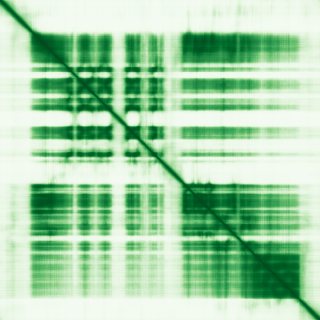
Predicted protein structure

Clinical relevance (Genomics England PanelApp)

Diagnostic Grade (Green)

  • Beckwith-Wiedemann syndrome (BWS) and other congenital overgrowth disorders

    MONOALLELIC, autosomal or pseudoautosomal, NOT imprinted
  • DDG2P

    MONOALLELIC, autosomal or pseudoautosomal, imprinted status unknown
  • Fetal anomalies

    MONOALLELIC, autosomal or pseudoautosomal, imprinted status unknown
  • Intellectual disability

    MONOALLELIC, autosomal or pseudoautosomal, imprinted status unknown
  • Segmental overgrowth disorders - Deep sequencing

    MONOALLELIC, autosomal or pseudoautosomal, imprinted status unknown

Disease associations (Open Targets)

  • Imagawa-Matsumoto syndrome

    0.78
  • hereditary disease

    0.50
  • prostate adenocarcinoma

    0.49
  • viral infectious disease

    0.46
  • melanoma

    0.46
  • breast carcinoma

    0.44
  • cancer

    0.43
  • Weaver syndrome

    0.40
  • endometrioid stromal sarcoma

    0.38
  • hemangioblastoma

    0.38

Score is the Open Targets composite evidence score (0-1). Higher = stronger gene-disease association.

Protein function (UniProt)

Polycomb protein SUZ12

Polycomb group (PcG) protein. Component of the PRC2 complex, which methylates 'Lys-9' (H3K9me) and 'Lys-27' (H3K27me) of histone H3, leading to transcriptional repression of the affected target gene (PubMed:15225548, PubMed:15231737, PubMed:15385962, PubMed:16618801, PubMed:17344414, PubMed:18285464, PubMed:28229514, PubMed:29499137, PubMed:31959557). The PRC2 complex may also serve as a recruiting platform for DNA methyltransferases, thereby linking two epigenetic repression systems (PubMed:12351676, PubMed:12435631, PubMed:15099518, PubMed:15225548, PubMed:15385962, PubMed:15684044, PubMed:16431907, PubMed:18086877, PubMed:18285464). Genes repressed by the PRC2 complex include HOXC8, HOXA9, MYT1 and CDKN2A (PubMed:15231737, PubMed:16618801, PubMed:17200670, PubMed:31959557)

Data sources: HGNC (CC BY 4.0), AlphaFold (CC BY 4.0, Jumper et al. Nature 2021), Genomics England PanelApp (CC BY 4.0), ClinGen, Open Targets (CC0), UniProt.

Not for sole clinical decision-making. Always verify against primary sources.