Skip to content
GenoLensGenoLens

SYNE1

Chr 6q25.2

spectrin repeat containing nuclear envelope protein 1

Aliases:
SYNE-1B, KIAA0796, 8B, Nesprin-1, enaptin
MANE:
ENST00000367255.10

Annotations refreshed 1 month ago.

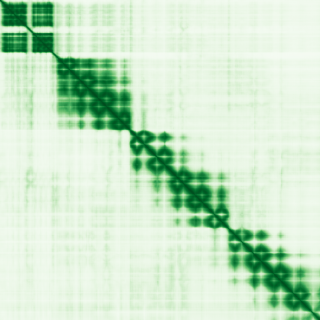
Predicted protein structure

Clinical relevance (Genomics England PanelApp)

Diagnostic Grade (Green)

  • Arthrogryposis

    BIALLELIC, autosomal or pseudoautosomal
  • Ataxia and cerebellar anomalies - narrow panel

    BIALLELIC, autosomal or pseudoautosomal
  • Congenital muscular dystrophy

    BOTH monoallelic and biallelic, autosomal or pseudoautosomal
  • DDG2P

    BIALLELIC, autosomal or pseudoautosomal
  • Fetal anomalies

    BIALLELIC, autosomal or pseudoautosomal
  • Hereditary ataxia

    BIALLELIC, autosomal or pseudoautosomal
  • Hereditary ataxia with onset in adulthood

    BIALLELIC, autosomal or pseudoautosomal
  • Limb girdle muscular dystrophies, myofibrillar myopathies and distal myopathies

    BOTH monoallelic and biallelic, autosomal or pseudoautosomal

+4 more panels — install the extension to see the full list inline on any page.

Disease associations (Open Targets)

  • autosomal recessive ataxia, Beauce type

    0.80
  • Emery-Dreifuss muscular dystrophy 4, autosomal dominant

    0.77
  • arthrogryposis multiplex congenita 3, myogenic type

    0.75
  • autosomal dominant Emery-Dreifuss muscular dystrophy

    0.51
  • Emery-Dreifuss muscular dystrophy

    0.48
  • hereditary disease

    0.47
  • cerebellar ataxia

    0.44
  • uterine corpus leiomyoma

    0.44
  • juvenile amyotrophic lateral sclerosis

    0.44
  • Uterine leiomyoma

    0.42

Score is the Open Targets composite evidence score (0-1). Higher = stronger gene-disease association.

Protein function (UniProt)

Nesprin-1

Multi-isomeric modular protein which forms a linking network between organelles and the actin cytoskeleton to maintain the subcellular spatial organization. As a component of the LINC (LInker of Nucleoskeleton and Cytoskeleton) complex involved in the connection between the nuclear lamina and the cytoskeleton. The nucleocytoplasmic interactions established by the LINC complex play an important role in the transmission of mechanical forces across the nuclear envelope and in nuclear movement and positioning. May be involved in nucleus-centrosome attachment and nuclear migration in neural progenitors implicating LINC complex association with SUN1/2 and probably association with cytoplasmic dynein-dynactin motor complexes; SYNE1 and SYNE2 may act redundantly. Required for centrosome migration to the apical cell surface during early ciliogenesis. May be involved in nuclear remodeling during sperm head formation in spermatogenesis; a probable SUN3:SYNE1/KASH1 LINC complex may tether spermatid nuclei to posterior cytoskeletal structures such as the manchette

Data sources: HGNC (CC BY 4.0), AlphaFold (CC BY 4.0, Jumper et al. Nature 2021), Genomics England PanelApp (CC BY 4.0), ClinGen, Open Targets (CC0), UniProt.

Not for sole clinical decision-making. Always verify against primary sources.