
AlphaFold predicted structure
SYNE4 · Q8N205
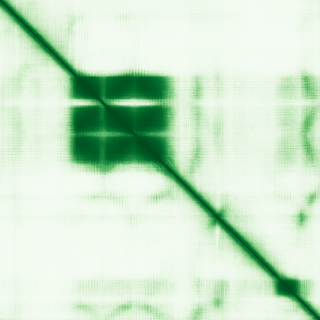
Mean pLDDT
57.2/ 100
Low
404 residues
Confidence breakdown
- Very high(≥ 90)14%
- Confident(70–90)16%
- Low(50–70)17%
- Very low(< 50)54%
Open interactive 3D viewer
AlphaFold (Jumper et al., 2021) · CC BY 4.0
spectrin repeat containing nuclear envelope family member 4
Annotations refreshed 2 months ago.
Diagnostic Grade (Green)
Monogenic hearing loss
BIALLELIC, autosomal or pseudoautosomalhearing loss, autosomal recessive
deafness
nonsyndromic genetic hearing loss
Rare genetic deafness
Non-syndromic genetic deafness
autosomal dominant nonsyndromic hearing loss
Usher syndrome
Usher syndrome type 1
hearing loss, autosomal dominant 87
X-linked nonsyndromic hearing loss
Score is the Open Targets composite evidence score (0-1). Higher = stronger gene-disease association.
Nesprin-4
As a component of the LINC (LInker of Nucleoskeleton and Cytoskeleton) complex, involved in the connection between the nuclear lamina and the cytoskeleton. The nucleocytoplasmic interactions established by the LINC complex play an important role in the transmission of mechanical forces across the nuclear envelope and in nuclear movement and positioning (By similarity). Behaves as a kinesin cargo, providing a functional binding site for kinesin-1 at the nuclear envelope. Hence may contribute to the establishment of secretory epithelial morphology by promoting kinesin-dependent apical migration of the centrosome and Golgi apparatus and basal localization of the nucleus (By similarity)
SYNE4 · Q8N205
Mean pLDDT
57.2/ 100
Low
404 residues
Confidence breakdown
AlphaFold (Jumper et al., 2021) · CC BY 4.0