Skip to content
GenoLensGenoLens

SZT2

Chr 1p34.2

SZT2 subunit of KICSTOR complex

Aliases:
FLJ10387, SZT2B, RP11-506B15.1, FLJ34502, SZT2A
MANE:
ENST00000634258.3

Annotations refreshed 9 hours ago.

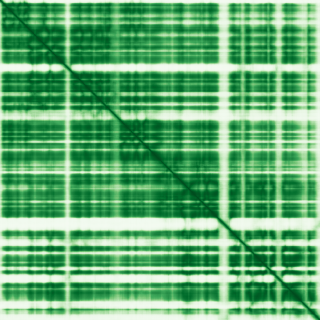
Predicted protein structure

Clinical relevance (Genomics England PanelApp)

Diagnostic Grade (Green)

  • DDG2P

    BIALLELIC, autosomal or pseudoautosomal
  • Early onset or syndromic epilepsy

    BIALLELIC, autosomal or pseudoautosomal
  • Intellectual disability

    BIALLELIC, autosomal or pseudoautosomal
  • Fetal anomalies

    BIALLELIC, autosomal or pseudoautosomal

Disease associations (Open Targets)

  • developmental and epileptic encephalopathy, 18

    0.77
  • hereditary disease

    0.53
  • Rolandic epilepsy

    0.52
  • self-limited epilepsy with centrotemporal spikes

    0.52
  • Global developmental delay

    0.40
  • genetic developmental and epileptic encephalopathy

    0.37
  • Early infantile epileptic encephalopathy without suppression burst

    0.37
  • non-syndromic intellectual disability

    0.37
  • undetermined early-onset epileptic encephalopathy

    0.37
  • neurodegenerative disease

    0.33

Score is the Open Targets composite evidence score (0-1). Higher = stronger gene-disease association.

Protein function (UniProt)

KICSTOR complex protein SZT2

As part of the KICSTOR complex functions in the amino acid-sensing branch of the TORC1 signaling pathway. Recruits, in an amino acid-independent manner, the GATOR1 complex to the lysosomal membranes and allows its interaction with GATOR2 and the RAG GTPases. Functions upstream of the RAG GTPases and is required to negatively regulate mTORC1 signaling in absence of amino acids. In absence of the KICSTOR complex mTORC1 is constitutively localized to the lysosome and activated. The KICSTOR complex is also probably involved in the regulation of mTORC1 by glucose (PubMed:28199306, PubMed:28199315). May play a role in the cellular response to oxidative stress (By similarity)

Data sources: HGNC (CC BY 4.0), AlphaFold (CC BY 4.0, Jumper et al. Nature 2021), Genomics England PanelApp (CC BY 4.0), ClinGen, Open Targets (CC0), UniProt.

Not for sole clinical decision-making. Always verify against primary sources.