
AlphaFold predicted structure
TAB2 · Q9NYJ8
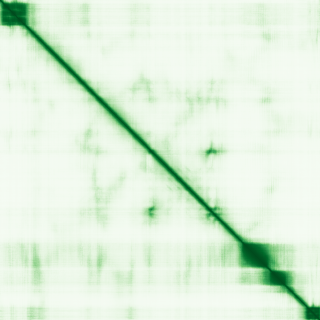
Mean pLDDT
52.4/ 100
Low
693 residues
Confidence breakdown
- Very high(≥ 90)14%
- Confident(70–90)10%
- Low(50–70)8%
- Very low(< 50)69%
Open interactive 3D viewer
AlphaFold (Jumper et al., 2021) · CC BY 4.0
TGF-beta activated kinase 1 (MAP3K7) binding protein 2
Annotations refreshed 2 months ago.
Diagnostic Grade (Green)
DDG2P
MONOALLELIC, autosomal or pseudoautosomal, imprinted status unknownFamilial non syndromic congenital heart disease
MONOALLELIC, autosomal or pseudoautosomal, NOT imprintedFetal anomalies
MONOALLELIC, autosomal or pseudoautosomal, imprinted status unknownPaediatric disorders - additional genes
MONOALLELIC, autosomal or pseudoautosomal, imprinted status unknownPaediatric or syndromic cardiomyopathy
MONOALLELIC, autosomal or pseudoautosomal, imprinted status unknownDilated and arrhythmogenic cardiomyopathy
MONOALLELIC, autosomal or pseudoautosomal, imprinted status unknownIntellectual disability
MONOALLELIC, autosomal or pseudoautosomal, imprinted status unknowncongenital heart malformation
hereditary disease
chromosome 6q24-q25 deletion syndrome
cardiac anomalies-short stature-joint hypermobility-facial dysmorphism syndrome due to TAB2 mutation
autoimmune disorder of central nervous system
breast carcinoma
COVID-19
neurodegenerative disease
dilated cardiomyopathy
atrial fibrillation
Score is the Open Targets composite evidence score (0-1). Higher = stronger gene-disease association.
TGF-beta-activated kinase 1 and MAP3K7-binding protein 2
Adapter required to activate the JNK and NF-kappa-B signaling pathways through the specific recognition of 'Lys-63'-linked polyubiquitin chains by its RanBP2-type zinc finger (NZF) (PubMed:10882101, PubMed:11460167, PubMed:15327770, PubMed:22158122, PubMed:27746020, PubMed:33184450, PubMed:36681779). Acts as an adapter linking MAP3K7/TAK1 and TRAF6 to 'Lys-63'-linked polyubiquitin chains (PubMed:10882101, PubMed:11460167, PubMed:15327770, PubMed:22158122, PubMed:27746020). The RanBP2-type zinc finger (NZF) specifically recognizes Lys-63'-linked polyubiquitin chains unanchored or anchored to the substrate proteins such as RIPK1/RIP1 and RIPK2: this acts as a scaffold to organize a large signaling complex to promote autophosphorylation of MAP3K7/TAK1, and subsequent activation of I-kappa-B-kinase (IKK) core complex by MAP3K7/TAK1 (PubMed:15327770, PubMed:18079694, PubMed:22158122). Also recognizes and binds Lys-63'-linked polyubiquitin chains of heterotypic 'Lys-63'-/'Lys-48'-linked branched ubiquitin chains (PubMed:27746020). Regulates the IL1-mediated translocation of NCOR1 out of the nucleus (By similarity). Involved in heart development (PubMed:20493459)
TAB2 · Q9NYJ8
Mean pLDDT
52.4/ 100
Low
693 residues
Confidence breakdown
AlphaFold (Jumper et al., 2021) · CC BY 4.0