
AlphaFold predicted structure
TAF1 · P21675
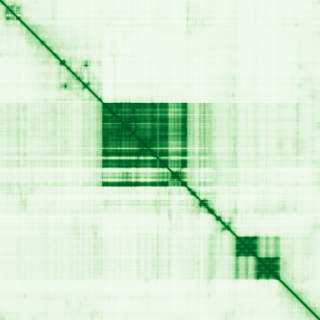
Mean pLDDT
61.8/ 100
Low
1,893 residues
Confidence breakdown
- Very high(≥ 90)26%
- Confident(70–90)18%
- Low(50–70)13%
- Very low(< 50)43%
Open interactive 3D viewer
AlphaFold (Jumper et al., 2021) · CC BY 4.0
TATA-box binding protein associated factor 1
Annotations refreshed 2 months ago.
Diagnostic Grade (Green)
Childhood onset dystonia, chorea or related movement disorder
X-LINKED: hemizygous mutation in males, monoallelic mutations in females may cause disease (may be less severe, later onset than males)DDG2P
X-LINKED: hemizygous mutation in males, biallelic mutations in femalesFetal anomalies
X-LINKED: hemizygous mutation in males, biallelic mutations in femalesIntellectual disability
X-LINKED: hemizygous mutation in males, biallelic mutations in femalesAdult onset dystonia, chorea or related movement disorder
X-LINKED: hemizygous mutation in males, monoallelic mutations in females may cause disease (may be less severe, later onset than males)Adult onset neurodegenerative disorder
X-LINKED: hemizygous mutation in males, monoallelic mutations in females may cause disease (may be less severe, later onset than males)Early onset dystonia
X-LINKED: hemizygous mutation in males, monoallelic mutations in females may cause disease (may be less severe, later onset than males)Parkinson Disease and Complex Parkinsonism
X-LINKED: hemizygous mutation in males, monoallelic mutations in females may cause disease (may be less severe, later onset than males)intellectual disability, X-linked, syndromic 33
X-linked dystonia-parkinsonism
HIV infectious disease
Abnormal heart morphology
neurodegenerative disease
Intellectual disability
hereditary disease
Global developmental delay
X-linked intellectual disability - psychosis - macroorchidism
Parkinson disease
Score is the Open Targets composite evidence score (0-1). Higher = stronger gene-disease association.
Transcription initiation factor TFIID subunit 1
The TFIID basal transcription factor complex plays a major role in the initiation of RNA polymerase II (Pol II)-dependent transcription (PubMed:33795473). TFIID recognizes and binds promoters with or without a TATA box via its subunit TBP, a TATA-box-binding protein, and promotes assembly of the pre-initiation complex (PIC) (PubMed:33795473). The TFIID complex consists of TBP and TBP-associated factors (TAFs), including TAF1, TAF2, TAF3, TAF4, TAF5, TAF6, TAF7, TAF8, TAF9, TAF10, TAF11, TAF12 and TAF13 (PubMed:33795473). TAF1 is the largest component and core scaffold of the TFIID complex, involved in nucleating complex assembly (PubMed:25412659, PubMed:27007846, PubMed:33795473). TAF1 forms a promoter DNA binding subcomplex of TFIID, together with TAF7 and TAF2 (PubMed:33795473). Contains novel N- and C-terminal Ser/Thr kinase domains which can autophosphorylate or transphosphorylate other transcription factors (PubMed:25412659, PubMed:8625415). Phosphorylates TP53 on 'Thr-55' which leads to MDM2-mediated degradation of TP53 (PubMed:25412659). Phosphorylates GTF2A1 and GTF2F1 on Ser residues (PubMed:25412659). Possesses DNA-binding activity (PubMed:25412659). Essential for progression of the G1 phase of the cell cycle (PubMed:11278496, PubMed:15053879, PubMed:2038334, PubMed:8450888, PubMed:8625415, PubMed:9660973, PubMed:9858607). Exhibits histone acetyltransferase activity towards histones H3 and H4 (PubMed:15870300)
TAF1 · P21675
Mean pLDDT
61.8/ 100
Low
1,893 residues
Confidence breakdown
AlphaFold (Jumper et al., 2021) · CC BY 4.0