
AlphaFold predicted structure
TAP1 · Q03518
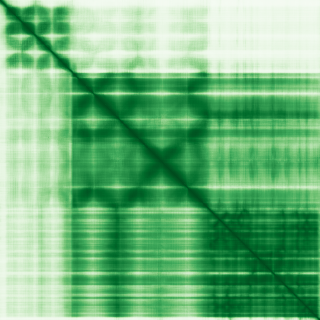
Mean pLDDT
78.5/ 100
Confident
748 residues
Confidence breakdown
- Very high(≥ 90)27%
- Confident(70–90)48%
- Low(50–70)16%
- Very low(< 50)9%
Open interactive 3D viewer
AlphaFold (Jumper et al., 2021) · CC BY 4.0
transporter 1, ATP binding cassette subfamily B member
Annotations refreshed 2 months ago.
Diagnostic Grade (Green)
COVID-19 research
BIALLELIC, autosomal or pseudoautosomalPrimary immunodeficiency or monogenic inflammatory bowel disease
BIALLELIC, autosomal or pseudoautosomalMHC class I deficiency
Immunodeficiency by defective expression of HLA class 1
MHC class II deficiency
autoimmune disorder of central nervous system
neurodegenerative disease
hereditary disease
neoplasm
cancer
melanoma
tuberculosis
Score is the Open Targets composite evidence score (0-1). Higher = stronger gene-disease association.
Antigen peptide transporter 1
ABC transporter associated with antigen processing. In complex with TAP2 mediates unidirectional translocation of peptide antigens from cytosol to endoplasmic reticulum (ER) for loading onto MHC class I (MHCI) molecules (PubMed:25377891, PubMed:25656091). Uses the chemical energy of ATP to export peptides against the concentration gradient (PubMed:25377891). During the transport cycle alternates between 'inward-facing' state with peptide binding site facing the cytosol to 'outward-facing' state with peptide binding site facing the ER lumen. Peptide antigen binding to ATP-loaded TAP1-TAP2 induces a switch to hydrolysis-competent 'outward-facing' conformation ready for peptide loading onto nascent MHCI molecules. Subsequently ATP hydrolysis resets the transporter to the 'inward facing' state for a new cycle (PubMed:11274390, PubMed:25377891, PubMed:25656091). Typically transports intracellular peptide antigens of 8 to 13 amino acids that arise from cytosolic proteolysis via IFNG-induced immunoproteasome. Binds peptides with free N- and C-termini, the first three and the C-terminal residues being critical. Preferentially selects peptides having a highly hydrophobic residue at position 3 and hydrophobic or charged residues at the C-terminal anchor. Proline at position 2 has the most destabilizing effect (PubMed:11274390, PubMed:7500034, PubMed:9256420). As a component of the peptide loading complex (PLC), acts as a molecular scaffold essential for peptide-MHCI assembly and antigen presentation (PubMed:1538751, PubMed:25377891, PubMed:26611325)
TAP1 · Q03518
Mean pLDDT
78.5/ 100
Confident
748 residues
Confidence breakdown
AlphaFold (Jumper et al., 2021) · CC BY 4.0