AlphaFold predicted structure
TBC1D32 · Q96NH3
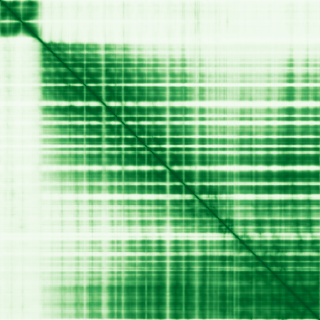
Mean pLDDT
80.5/ 100
Confident
1,257 residues
Confidence breakdown
- Very high(≥ 90)35%
- Confident(70–90)46%
- Low(50–70)10%
- Very low(< 50)9%
AlphaFold (Jumper et al., 2021) · CC BY 4.0
TBC1 domain family member 32
Annotations refreshed 1 month ago.
Diagnostic Grade (Green)
DDG2P
BIALLELIC, autosomal or pseudoautosomalFetal anomalies
BIALLELIC, autosomal or pseudoautosomalHydrocephalus
BIALLELIC, autosomal or pseudoautosomalMalformations of cortical development
BIALLELIC, autosomal or pseudoautosomalOphthalmological ciliopathies
BIALLELIC, autosomal or pseudoautosomalPituitary hormone deficiency
BIALLELIC, autosomal or pseudoautosomalRare multisystem ciliopathy disorders
BIALLELIC, autosomal or pseudoautosomalRetinal disorders
BIALLELIC, autosomal or pseudoautosomal+4 more panels — install the extension to see the full list inline on any page.
orofaciodigital syndrome IX
Orofaciodigital syndrome type 9
Alsahan-Harris syndrome
retinitis pigmentosa 100
ciliopathy
retinitis pigmentosa
atrial fibrillation
hypopituitarism
hereditary disease
neurodegenerative disease
Score is the Open Targets composite evidence score (0-1). Higher = stronger gene-disease association.
Protein broad-minded
Required for high-level Shh responses in the developing neural tube. Together with CDK20, controls the structure of the primary cilium by coordinating assembly of the ciliary membrane and axoneme, allowing GLI2 to be properly activated in response to Shh signaling (By similarity)
Curated MONDO disease pages that list TBC1D32 among their top associated genes.
TBC1D32 · Q96NH3

Mean pLDDT
80.5/ 100
Confident
1,257 residues
Confidence breakdown
AlphaFold (Jumper et al., 2021) · CC BY 4.0