AlphaFold predicted structure
TBXAS1 · P24557
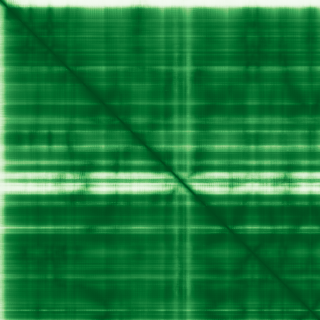
Mean pLDDT
91.3/ 100
Very high
533 residues
Confidence breakdown
- Very high(≥ 90)76%
- Confident(70–90)18%
- Low(50–70)5%
- Very low(< 50)1%
AlphaFold (Jumper et al., 2021) · CC BY 4.0
thromboxane A synthase 1
Annotations refreshed 1 month ago.
Diagnostic Grade (Green)
Bleeding and platelet disorders
BIALLELIC, autosomal or pseudoautosomalDDG2P
BIALLELIC, autosomal or pseudoautosomalInherited bleeding disorders
BIALLELIC, autosomal or pseudoautosomalSkeletal dysplasia
BIALLELIC, autosomal or pseudoautosomalFetal anomalies
BIALLELIC, autosomal or pseudoautosomalIntellectual disability
BIALLELIC, autosomal or pseudoautosomalghosal hematodiaphyseal dysplasia
platelet-type bleeding disorder 14
anemia (phenotype)
bone disorder
Recurrent thrombophlebitis
dry eye syndrome
Keratoconjunctivitis sicca
Precordial pain
tricuspid valve disorder
stroke disorder
Score is the Open Targets composite evidence score (0-1). Higher = stronger gene-disease association.
Thromboxane-A synthase
Catalyzes the conversion of prostaglandin H2 (PGH2) to thromboxane A2 (TXA2), a potent inducer of blood vessel constriction and platelet aggregation (PubMed:11097184, PubMed:11297515, PubMed:22735388, PubMed:24009185, PubMed:8436233, PubMed:9873013). Also cleaves PGH2 to 12-hydroxy-heptadecatrienoicacid (12-HHT) and malondialdehyde, which is known to act as a mediator of DNA damage. 12-HHT and malondialdehyde are formed stoichiometrically in the same amounts as TXA2 (PubMed:11297515, PubMed:22735388, PubMed:9873013). Additionally, displays dehydratase activity, toward (15S)-hydroperoxy-(5Z,8Z,11Z,13E)-eicosatetraenoate (15(S)-HPETE) producing 15-KETE and 15-HETE (PubMed:17459323)
TBXAS1 · P24557

Mean pLDDT
91.3/ 100
Very high
533 residues
Confidence breakdown
AlphaFold (Jumper et al., 2021) · CC BY 4.0