
AlphaFold predicted structure
TCF4 · P15884
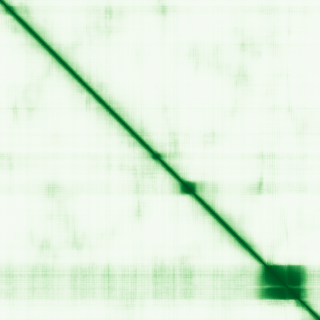
Mean pLDDT
51.1/ 100
Low
667 residues
Confidence breakdown
- Very high(≥ 90)12%
- Confident(70–90)6%
- Low(50–70)13%
- Very low(< 50)69%
Open interactive 3D viewer
AlphaFold (Jumper et al., 2021) · CC BY 4.0
transcription factor 4
Annotations refreshed 3 months ago.
Diagnostic Grade (Green)
Corneal dystrophy
MONOALLELIC, autosomal or pseudoautosomal, imprinted status unknownDDG2P
MONOALLELIC, autosomal or pseudoautosomal, imprinted status unknownEarly onset or syndromic epilepsy
MONOALLELIC, autosomal or pseudoautosomal, NOT imprintedFetal anomalies
MONOALLELIC, autosomal or pseudoautosomal, imprinted status unknownIntellectual disability
MONOALLELIC, autosomal or pseudoautosomal, NOT imprintedBilateral congenital or childhood onset cataracts
MONOALLELIC, autosomal or pseudoautosomal, imprinted status unknownFamilial Hirschsprung Disease
MONOALLELIC, autosomal or pseudoautosomal, NOT imprintedSevere microcephaly
MONOALLELIC, autosomal or pseudoautosomal, NOT imprintedPitt-Hopkins syndrome
corneal dystrophy, Fuchs endothelial, 3
Fuchs endothelial corneal dystrophy
hereditary disease
major depressive disorder
Abnormality of the skeletal system
autism spectrum disorder
schizophrenia
Fuchs' endothelial dystrophy
Intellectual disability
Score is the Open Targets composite evidence score (0-1). Higher = stronger gene-disease association.
Transcription factor 4
Transcription factor that binds to the immunoglobulin enhancer Mu-E5/KE5-motif. Involved in the initiation of neuronal differentiation. Activates transcription by binding to the E box (5'-CANNTG-3'). Binds to the E-box present in the somatostatin receptor 2 initiator element (SSTR2-INR) to activate transcription (By similarity). Preferentially binds to either 5'-ACANNTGT-3' or 5'-CCANNTGG-3'
Curated MONDO disease pages that list TCF4 among their top associated genes.
TCF4 · P15884
Mean pLDDT
51.1/ 100
Low
667 residues
Confidence breakdown
AlphaFold (Jumper et al., 2021) · CC BY 4.0