AlphaFold predicted structure
TENM3 · Q9P273
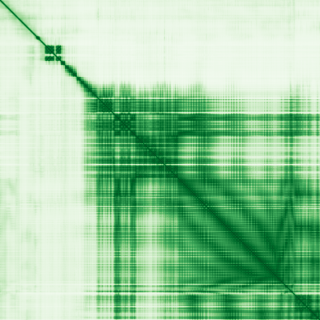
Mean pLDDT
77.4/ 100
Confident
2,699 residues
Confidence breakdown
- Very high(≥ 90)37%
- Confident(70–90)42%
- Low(50–70)6%
- Very low(< 50)16%
AlphaFold (Jumper et al., 2021) · CC BY 4.0
teneurin transmembrane protein 3
Annotations refreshed 1 month ago.
Diagnostic Grade (Green)
Anophthalmia or microphthalmia
BIALLELIC, autosomal or pseudoautosomalFetal anomalies
BIALLELIC, autosomal or pseudoautosomalIntellectual disability
BIALLELIC, autosomal or pseudoautosomalOcular coloboma
BIALLELIC, autosomal or pseudoautosomalStructural eye disease
BIALLELIC, autosomal or pseudoautosomalmicrophthalmia, isolated, with coloboma 9
microphthalmia, isolated, with coloboma
neurotic disorder
ovarian neoplasm
brain aneurysm
placenta praevia
Abnormality of limbs
myasthenia gravis
liver disorder
Proptosis
Score is the Open Targets composite evidence score (0-1). Higher = stronger gene-disease association.
Teneurin-3
Involved in neural development by regulating the establishment of proper connectivity within the nervous system. Acts in both pre- and postsynaptic neurons in the hippocampus to control the assembly of a precise topographic projection: required in both CA1 and subicular neurons for the precise targeting of proximal CA1 axons to distal subiculum, probably by promoting homophilic cell adhesion. Required for proper dendrite morphogenesis and axon targeting in the vertebrate visual system, thereby playing a key role in the development of the visual pathway. Regulates the formation in ipsilateral retinal mapping to both the dorsal lateral geniculate nucleus (dLGN) and the superior colliculus (SC). May also be involved in the differentiation of the fibroblast-like cells in the superficial layer of mandibular condylar cartilage into chondrocytes
Curated MONDO disease pages that list TENM3 among their top associated genes.
TENM3 · Q9P273

Mean pLDDT
77.4/ 100
Confident
2,699 residues
Confidence breakdown
AlphaFold (Jumper et al., 2021) · CC BY 4.0