
AlphaFold predicted structure
TET3 · O43151
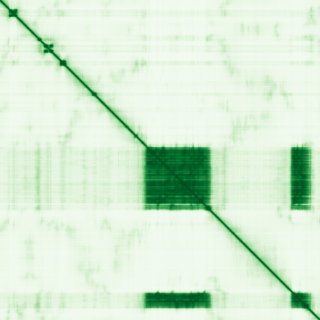
Mean pLDDT
51.9/ 100
Low
1,795 residues
Confidence breakdown
- Very high(≥ 90)19%
- Confident(70–90)9%
- Low(50–70)7%
- Very low(< 50)65%
Open interactive 3D viewer
AlphaFold (Jumper et al., 2021) · CC BY 4.0
tet methylcytosine dioxygenase 3
Annotations refreshed 2 months ago.
Diagnostic Grade (Green)
DDG2P
BOTH monoallelic and biallelic, autosomal or pseudoautosomalIntellectual disability
BOTH monoallelic and biallelic, autosomal or pseudoautosomalEarly onset or syndromic epilepsy
BOTH monoallelic and biallelic, autosomal or pseudoautosomalBeck-Fahrner syndrome
hereditary disease
rheumatoid arthritis
neurodegenerative disease
systemic lupus erythematosus
risk-taking behaviour
Intellectual disability
cataract
smoking initiation
attention deficit-hyperactivity disorder
Score is the Open Targets composite evidence score (0-1). Higher = stronger gene-disease association.
Methylcytosine dioxygenase TET3
Dioxygenase that catalyzes the conversion of the modified genomic base 5-methylcytosine (5mC) into 5-hydroxymethylcytosine (5hmC) and plays a key role in epigenetic chromatin reprogramming in the zygote following fertilization (PubMed:31928709). Also mediates subsequent conversion of 5hmC into 5-formylcytosine (5fC), and conversion of 5fC to 5-carboxylcytosine (5caC). Conversion of 5mC into 5hmC, 5fC and 5caC probably constitutes the first step in cytosine demethylation (By similarity). Selectively binds to the promoter region of target genes and contributes to regulate the expression of numerous developmental genes (PubMed:23217707). In zygotes, DNA demethylation occurs selectively in the paternal pronucleus before the first cell division, while the adjacent maternal pronucleus and certain paternally-imprinted loci are protected from this process. Participates in DNA demethylation in the paternal pronucleus by mediating conversion of 5mC into 5hmC, 5fC and 5caC. Does not mediate DNA demethylation of maternal pronucleus because of the presence of DPPA3/PGC7 on maternal chromatin that prevents TET3-binding to chromatin (By similarity). In addition to its role in DNA demethylation, also involved in the recruitment of the O-GlcNAc transferase OGT to CpG-rich transcription start sites of active genes, thereby promoting histone H2B GlcNAcylation by OGT (PubMed:23353889). Binds preferentially to DNA containing cytidine-phosphate-guanosine (CpG) dinucleotides over CpH (H=A, T, and C), hemimethylated-CpG and hemimethylated-hydroxymethyl-CpG (PubMed:29276034)
TET3 · O43151
Mean pLDDT
51.9/ 100
Low
1,795 residues
Confidence breakdown
AlphaFold (Jumper et al., 2021) · CC BY 4.0