
AlphaFold predicted structure
TFAP2A · P05549
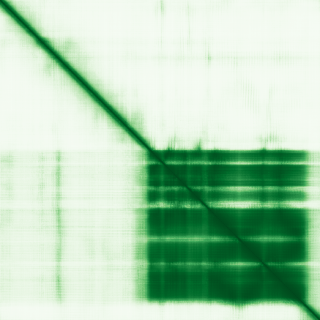
Mean pLDDT
67.9/ 100
Low
437 residues
Confidence breakdown
- Very high(≥ 90)39%
- Confident(70–90)11%
- Low(50–70)6%
- Very low(< 50)45%
Open interactive 3D viewer
AlphaFold (Jumper et al., 2021) · CC BY 4.0
transcription factor AP-2 alpha
Annotations refreshed 3 months ago.
Diagnostic Grade (Green)
Bilateral congenital or childhood onset cataracts
MONOALLELIC, autosomal or pseudoautosomal, imprinted status unknownCAKUT
MONOALLELIC, autosomal or pseudoautosomal, NOT imprintedClefting
MONOALLELIC, autosomal or pseudoautosomal, imprinted status unknownDDG2P
MONOALLELIC, autosomal or pseudoautosomal, imprinted status unknownDeafness and congenital structural abnormalities
MONOALLELIC, autosomal or pseudoautosomal, NOT imprintedFetal anomalies
MONOALLELIC, autosomal or pseudoautosomal, imprinted status unknownStructural eye disease
MONOALLELIC, autosomal or pseudoautosomal, NOT imprintedLimb disorders
MONOALLELIC, autosomal or pseudoautosomal, imprinted status unknown+2 more panels — install the extension to see the full list inline on any page.
branchiooculofacial syndrome
Branchio-oculo-facial syndrome
hereditary disease
neurodegenerative disease
cleft lip
microphthalmia
Hypertelorism
Short neck
Lens subluxation
High palate
Score is the Open Targets composite evidence score (0-1). Higher = stronger gene-disease association.
Transcription factor AP-2-alpha
Sequence-specific DNA-binding protein that interacts with inducible viral and cellular enhancer elements to regulate transcription of selected genes. AP-2 factors bind to the consensus sequence 5'-GCCNNNGGC-3' and activate genes involved in a large spectrum of important biological functions including proper eye, face, body wall, limb and neural tube development. They can also suppress a number of genes including MCAM/MUC18 and C/EBP alpha. Is involved in the negative regulation of Wnt canonical signaling, and is a transcriptional repressor of MYC (PubMed:33000225). AP-2-alpha is the only AP-2 protein required for early morphogenesis of the lens vesicle. Together with the CITED2 coactivator, stimulates the PITX2 P1 promoter transcription activation. Associates with chromatin to the PITX2 P1 promoter region
TFAP2A · P05549
Mean pLDDT
67.9/ 100
Low
437 residues
Confidence breakdown
AlphaFold (Jumper et al., 2021) · CC BY 4.0