
AlphaFold predicted structure
TFAP2B · Q92481
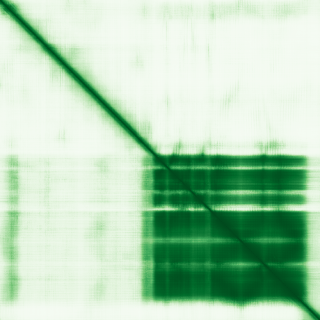
Mean pLDDT
66.1/ 100
Low
460 residues
Confidence breakdown
- Very high(≥ 90)36%
- Confident(70–90)11%
- Low(50–70)8%
- Very low(< 50)46%
Open interactive 3D viewer
AlphaFold (Jumper et al., 2021) · CC BY 4.0
transcription factor AP-2 beta
Annotations refreshed 2 months ago.
Diagnostic Grade (Green)
DDG2P
MONOALLELIC, autosomal or pseudoautosomal, imprinted status unknownFetal anomalies
MONOALLELIC, autosomal or pseudoautosomal, imprinted status unknownLimb disorders
MONOALLELIC, autosomal or pseudoautosomal, imprinted status unknownRare syndromic craniosynostosis or isolated multisuture synostosis
MONOALLELIC, autosomal or pseudoautosomal, imprinted status unknownClefting
Intellectual disability
MONOALLELIC, autosomal or pseudoautosomal, imprinted status unknownChar syndrome
patent ductus arteriosus 2
type 2 diabetes mellitus
Abnormality of the skeletal system
diabetes mellitus
open-angle glaucoma
glaucoma
hereditary disease
obesity disorder
nephrolithiasis
Score is the Open Targets composite evidence score (0-1). Higher = stronger gene-disease association.
Transcription factor AP-2-beta
Sequence-specific DNA-binding protein that interacts with inducible viral and cellular enhancer elements to regulate transcription of selected genes. AP-2 factors bind to the consensus sequence 5'-GCCNNNGGC-3' and activate genes involved in a large spectrum of important biological functions including proper eye, face, body wall, limb and neural tube development. They also suppress a number of genes including MCAM/MUC18, C/EBP alpha and MYC. AP-2-beta appears to be required for normal face and limb development and for proper terminal differentiation and function of renal tubular epithelia
Curated MONDO disease pages that list TFAP2B among their top associated genes.
TFAP2B · Q92481
Mean pLDDT
66.1/ 100
Low
460 residues
Confidence breakdown
AlphaFold (Jumper et al., 2021) · CC BY 4.0