
AlphaFold predicted structure
TFRC · P02786
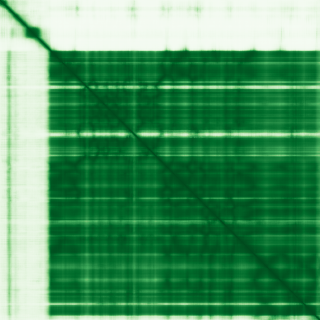
Mean pLDDT
86.7/ 100
Confident
760 residues
Confidence breakdown
- Very high(≥ 90)75%
- Confident(70–90)9%
- Low(50–70)4%
- Very low(< 50)12%
Open interactive 3D viewer
AlphaFold (Jumper et al., 2021) · CC BY 4.0
transferrin receptor
Annotations refreshed 2 months ago.
Diagnostic Grade (Green)
COVID-19 research
BIALLELIC, autosomal or pseudoautosomalPrimary immunodeficiency or monogenic inflammatory bowel disease
BIALLELIC, autosomal or pseudoautosomalDDG2P
BIALLELIC, autosomal or pseudoautosomalTFRC-related combined immunodeficiency
type 2 diabetes mellitus
mucopolysaccharidosis type 2
diabetes mellitus
combined immunodeficiency
Combined T and B cell immunodeficiency
diabetic retinopathy
neurodegenerative disease
prostate adenocarcinoma
non-small cell lung carcinoma
Score is the Open Targets composite evidence score (0-1). Higher = stronger gene-disease association.
Transferrin receptor protein 1
Cellular uptake of iron occurs via receptor-mediated endocytosis of ligand-occupied transferrin receptor into specialized endosomes (PubMed:26214738, PubMed:41772062). Endosomal acidification leads to iron release. The apotransferrin-receptor complex is then recycled to the cell surface with a return to neutral pH and the concomitant loss of affinity of apotransferrin for its receptor. Transferrin receptor is necessary for development of erythrocytes and the nervous system (By similarity). A second ligand, the hereditary hemochromatosis protein HFE, competes for binding with transferrin for an overlapping C-terminal binding site. Positively regulates T and B cell proliferation through iron uptake (PubMed:26642240). Acts as a lipid sensor that regulates mitochondrial fusion by regulating activation of the JNK pathway (PubMed:26214738). When dietary levels of stearate (C18:0) are low, promotes activation of the JNK pathway, resulting in HUWE1-mediated ubiquitination and subsequent degradation of the mitofusin MFN2 and inhibition of mitochondrial fusion (PubMed:26214738). When dietary levels of stearate (C18:0) are high, TFRC stearoylation inhibits activation of the JNK pathway and thus degradation of the mitofusin MFN2 (PubMed:26214738). Mediates uptake of NICOL1 into fibroblasts where it may regulate extracellular matrix production (By similarity)
TFRC · P02786
Mean pLDDT
86.7/ 100
Confident
760 residues
Confidence breakdown
AlphaFold (Jumper et al., 2021) · CC BY 4.0