
AlphaFold predicted structure
TGDS · O95455
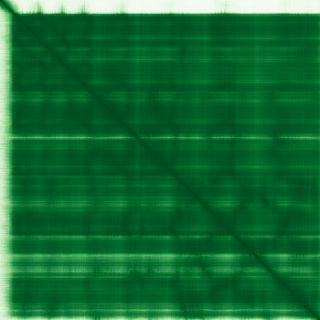
Mean pLDDT
94.3/ 100
Very high
350 residues
Confidence breakdown
- Very high(≥ 90)92%
- Confident(70–90)4%
- Low(50–70)1%
- Very low(< 50)4%
Open interactive 3D viewer
AlphaFold (Jumper et al., 2021) · CC BY 4.0
TDP-glucose 4,6-dehydratase
Annotations refreshed 2 months ago.
Diagnostic Grade (Green)
Clefting
BIALLELIC, autosomal or pseudoautosomalDDG2P
BIALLELIC, autosomal or pseudoautosomalFetal anomalies
BIALLELIC, autosomal or pseudoautosomalLimb disorders
BIALLELIC, autosomal or pseudoautosomalIntellectual disability
BIALLELIC, autosomal or pseudoautosomalSkeletal dysplasia
BIALLELIC, autosomal or pseudoautosomalCatel-Manzke syndrome
neurodegenerative disease
hereditary disease
cleft palate
spondylolisthesis
musculoskeletal system disorder
hair color
head and neck cancer
amelogenesis imperfecta
Hypomaturation amelogenesis imperfecta
Score is the Open Targets composite evidence score (0-1). Higher = stronger gene-disease association.
UDP-D-glucose 4,6-dehydratase
UDP-glucose 4,6-dehydratase that converts UDP-glucose into UDP-4-keto-6-deoxyglucose, and which is required for glycosaminoglycan biosynthesis and skeletal development (PubMed:40836090). UDP-4-keto-6-deoxyglucose is a mimic of the reaction intermediate of UXS1 and acts as an enzyme-rescue metabolite to promote the completion of UXS1 catalytic cycle when NAD(+) levels are low (PubMed:40836090). Under low NAD(+) conditions, UXS1 forms an inactive UDP-4-ketoxylose intermediate bound to NADH, impairing the synthesis of specific glycans that are essential for skeletal development (PubMed:40836090). UDP-4-keto-6-deoxyglucose is used by the inactive NADH-bound UXS1 to produce UDP-6-deoxyglucose and NAD(+) within the catalytic pocket of UXS1, regenerating the essential cofactor NAD(+) (PubMed:40836090)
TGDS · O95455
Mean pLDDT
94.3/ 100
Very high
350 residues
Confidence breakdown
AlphaFold (Jumper et al., 2021) · CC BY 4.0