
AlphaFold predicted structure
TGFBI · Q15582
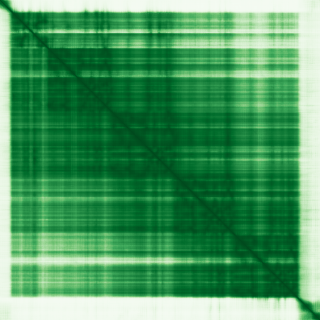
Mean pLDDT
90.3/ 100
Very high
683 residues
Confidence breakdown
- Very high(≥ 90)85%
- Confident(70–90)5%
- Low(50–70)3%
- Very low(< 50)8%
Open interactive 3D viewer
AlphaFold (Jumper et al., 2021) · CC BY 4.0
transforming growth factor beta induced
Annotations refreshed 2 months ago.
Diagnostic Grade (Green)
Corneal abnormalities
BOTH monoallelic and biallelic (but BIALLELIC mutations cause a more SEVERE disease form), autosomal or pseudoautosomalCorneal dystrophy
BOTH monoallelic and biallelic (but BIALLELIC mutations cause a more SEVERE disease form), autosomal or pseudoautosomalStructural eye disease
MONOALLELIC, autosomal or pseudoautosomal, NOT imprintedlattice corneal dystrophy type I
Reis-Bucklers corneal dystrophy
Reis-Bücklers corneal dystrophy
granular corneal dystrophy type I
granular corneal dystrophy type II
epithelial basement membrane dystrophy
Microcystic corneal dystrophy
Thiel-Behnke corneal dystrophy
epithelial-stromal TGFBI dystrophy
corneal dystrophy
Score is the Open Targets composite evidence score (0-1). Higher = stronger gene-disease association.
Transforming growth factor-beta-induced protein ig-h3
Plays a role in cell adhesion (PubMed:8024701). May play a role in cell-collagen interactions (By similarity)
Curated MONDO disease pages that list TGFBI among their top associated genes.
TGFBI · Q15582
Mean pLDDT
90.3/ 100
Very high
683 residues
Confidence breakdown
AlphaFold (Jumper et al., 2021) · CC BY 4.0