Skip to content
GenoLensGenoLens

TGFBR1

Chr 9q22.33

transforming growth factor beta receptor 1

Aliases:
ALK-5, ACVRLK4, ALK5, TBRI, TBR-i
MANE:
ENST00000374994.9

Annotations refreshed 1 month ago.

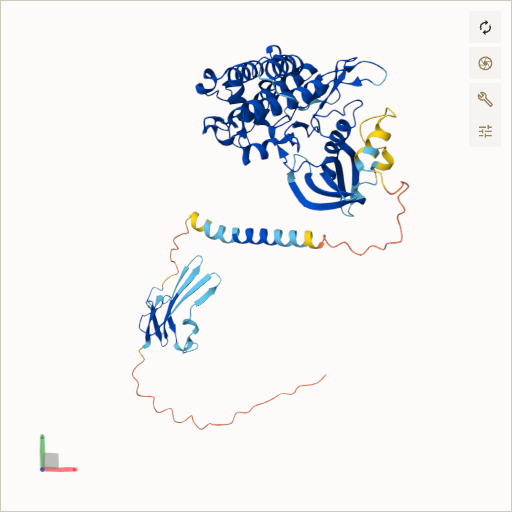
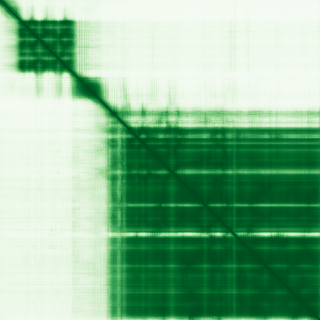
Predicted protein structure

Clinical relevance (Genomics England PanelApp)

Diagnostic Grade (Green)

  • Arthrogryposis

    MONOALLELIC, autosomal or pseudoautosomal, imprinted status unknown
  • Clefting

    MONOALLELIC, autosomal or pseudoautosomal, imprinted status unknown
  • COVID-19 research

    MONOALLELIC, autosomal or pseudoautosomal, imprinted status unknown
  • DDG2P

    MONOALLELIC, autosomal or pseudoautosomal, imprinted status unknown
  • Ehlers Danlos syndrome with a likely monogenic cause

    MONOALLELIC, autosomal or pseudoautosomal, NOT imprinted
  • Fetal anomalies

    MONOALLELIC, autosomal or pseudoautosomal, imprinted status unknown
  • Infantile enterocolitis & monogenic inflammatory bowel disease

    MONOALLELIC, autosomal or pseudoautosomal, imprinted status unknown
  • Pneumothorax - familial

    MONOALLELIC, autosomal or pseudoautosomal, imprinted status unknown

+8 more panels — install the extension to see the full list inline on any page.

Disease associations (Open Targets)

  • Loeys-Dietz syndrome 1

    0.83
  • Loeys-Dietz syndrome

    0.79
  • multiple self-healing squamous epithelioma

    0.76
  • familial thoracic aortic aneurysm and aortic dissection

    0.68
  • cancer

    0.55
  • Rare disease with thoracic aortic aneurysm and aortic dissection

    0.54
  • Alzheimer disease

    0.48
  • Parkinson disease

    0.46
  • multiple sclerosis

    0.45
  • neurodegenerative disease

    0.45

Score is the Open Targets composite evidence score (0-1). Higher = stronger gene-disease association.

Protein function (UniProt)

TGF-beta receptor type-1

Transmembrane serine/threonine kinase forming with the TGF-beta type II serine/threonine kinase receptor, TGFBR2, the non-promiscuous receptor for the TGF-beta cytokines TGFB1, TGFB2 and TGFB3. Transduces the TGFB1, TGFB2 and TGFB3 signal from the cell surface to the cytoplasm and is thus regulating a plethora of physiological and pathological processes including cell cycle arrest in epithelial and hematopoietic cells, control of mesenchymal cell proliferation and differentiation, wound healing, extracellular matrix production, immunosuppression and carcinogenesis (PubMed:33914044). The formation of the receptor complex composed of 2 TGFBR1 and 2 TGFBR2 molecules symmetrically bound to the cytokine dimer results in the phosphorylation and the activation of TGFBR1 by the constitutively active TGFBR2. Activated TGFBR1 phosphorylates SMAD2 which dissociates from the receptor and interacts with SMAD4. The SMAD2-SMAD4 complex is subsequently translocated to the nucleus where it modulates the transcription of the TGF-beta-regulated genes. This constitutes the canonical SMAD-dependent TGF-beta signaling cascade. Also involved in non-canonical, SMAD-independent TGF-beta signaling pathways. For instance, TGFBR1 induces TRAF6 autoubiquitination which in turn results in MAP3K7 ubiquitination and activation to trigger apoptosis. Also regulates epithelial to mesenchymal transition through a SMAD-independent signaling pathway through PARD6A phosphorylation and activation

Data sources: HGNC (CC BY 4.0), AlphaFold (CC BY 4.0, Jumper et al. Nature 2021), Genomics England PanelApp (CC BY 4.0), ClinGen, Open Targets (CC0), UniProt.

Not for sole clinical decision-making. Always verify against primary sources.