
AlphaFold predicted structure
THG1L · Q9NWX6
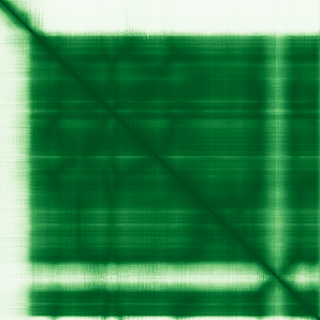
Mean pLDDT
89.4/ 100
Confident
298 residues
Confidence breakdown
- Very high(≥ 90)80%
- Confident(70–90)8%
- Low(50–70)2%
- Very low(< 50)10%
Open interactive 3D viewer
AlphaFold (Jumper et al., 2021) · CC BY 4.0
tRNA-histidine guanylyltransferase 1 like
Annotations refreshed 2 months ago.
Diagnostic Grade (Green)
Ataxia and cerebellar anomalies - narrow panel
BIALLELIC, autosomal or pseudoautosomalDDG2P
BIALLELIC, autosomal or pseudoautosomalHereditary ataxia with onset in adulthood
BIALLELIC, autosomal or pseudoautosomalspinocerebellar ataxia, autosomal recessive 28
neurodevelopmental disorder
hereditary disease
Brugada syndrome
Romano-Ward syndrome
familial long QT syndrome
familial atrial fibrillation
Hirschsprung disease
Familial progressive cardiac conduction defect
Wolff-Parkinson-White syndrome
Score is the Open Targets composite evidence score (0-1). Higher = stronger gene-disease association.
Probable tRNA(His) guanylyltransferase
Adds a GMP to the 5'-end of tRNA(His) after transcription and RNase P cleavage. This step is essential for proper recognition of the tRNA and for the fidelity of protein synthesis (Probable). Also functions as a guanyl-nucleotide exchange factor/GEF for the MFN1 and MFN2 mitofusins thereby regulating mitochondrial fusion (PubMed:25008184, PubMed:27307223). By regulating both mitochondrial dynamics and bioenergetic function, it contributes to cell survival following oxidative stress (PubMed:25008184, PubMed:27307223)
THG1L · Q9NWX6
Mean pLDDT
89.4/ 100
Confident
298 residues
Confidence breakdown
AlphaFold (Jumper et al., 2021) · CC BY 4.0