Skip to content
GenoLensGenoLens

THOC1

Chr 18p11.32

THO complex subunit 1

Aliases:
P84, HPR1
MANE:
ENST00000261600.11

Annotations refreshed 9 hours ago.

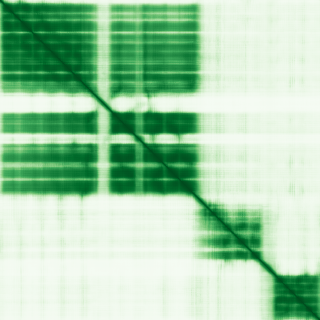
Predicted protein structure

Clinical relevance (Genomics England PanelApp)

Moderate Evidence (Amber)

  • Monogenic hearing loss

    MONOALLELIC, autosomal or pseudoautosomal, NOT imprinted

Disease associations (Open Targets)

  • neurodegenerative disease

    0.41
  • hearing loss, autosomal dominant 86

    0.36
  • ovarian neoplasm

    0.29
  • urolithiasis

    0.27
  • alcohol drinking

    0.27
  • immune system disorder

    0.25
  • Non-syndromic genetic deafness

    0.18
  • nonsyndromic deafness

    0.18
  • nonsyndromic genetic hearing loss

    0.18
  • Abnormality of the skeletal system

    0.12

Score is the Open Targets composite evidence score (0-1). Higher = stronger gene-disease association.

Protein function (UniProt)

THO complex subunit 1

Component of the THO subcomplex of the TREX complex which is thought to couple mRNA transcription, processing and nuclear export, and which specifically associates with spliced mRNA and not with unspliced pre-mRNA (PubMed:15833825, PubMed:15998806, PubMed:17190602). Required for efficient export of polyadenylated RNA (PubMed:23222130). The THOC1-THOC2-THOC3 core complex alone is sufficient to bind export factor NXF1-NXT1 and promote ATPase activity of DDX39B/UAP56 (PubMed:33191911). TREX is recruited to spliced mRNAs by a transcription-independent mechanism, binds to mRNA upstream of the exon-junction complex (EJC) and is recruited in a splicing- and cap-dependent manner to a region near the 5' end of the mRNA where it functions in mRNA export to the cytoplasm via the TAP/NXF1 pathway (PubMed:15833825, PubMed:15998806, PubMed:17190602). Regulates transcriptional elongation of a subset of genes (PubMed:22144908). Involved in genome stability by preventing co-transcriptional R-loop formation (By similarity). May play a role in hair cell formation, hence may be involved in hearing (By similarity)

Data sources: HGNC (CC BY 4.0), AlphaFold (CC BY 4.0, Jumper et al. Nature 2021), Genomics England PanelApp (CC BY 4.0), ClinGen, Open Targets (CC0), UniProt.

Not for sole clinical decision-making. Always verify against primary sources.