
AlphaFold predicted structure
THOC6 · Q86W42
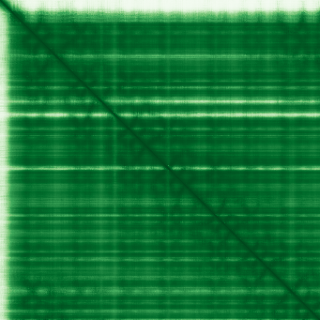
Mean pLDDT
93.6/ 100
Very high
341 residues
Confidence breakdown
- Very high(≥ 90)89%
- Confident(70–90)8%
- Low(50–70)1%
- Very low(< 50)2%
Open interactive 3D viewer
AlphaFold (Jumper et al., 2021) · CC BY 4.0
THO complex subunit 6
Annotations refreshed 2 months ago.
Diagnostic Grade (Green)
DDG2P
BIALLELIC, autosomal or pseudoautosomalFetal anomalies
BIALLELIC, autosomal or pseudoautosomalIntellectual disability
BIALLELIC, autosomal or pseudoautosomalTHOC6-related developmental delay-microcephaly-facial dysmorphism syndrome
hereditary disease
neurodegenerative disease
Intellectual disability
dystonia, early-onset, and/or spastic paraplegia
glioma
central nervous system cancer
Arrhythmogenic right ventricular dysplasia
Wolff-Parkinson-White syndrome
hypertrophic cardiomyopathy
Score is the Open Targets composite evidence score (0-1). Higher = stronger gene-disease association.
THO complex subunit 6
Component of the THO subcomplex of the TREX complex which is thought to couple mRNA transcription, processing and nuclear export, and which specifically associates with spliced mRNA and not with unspliced pre-mRNA (PubMed:15833825, PubMed:15998806, PubMed:17190602). Plays a key structural role in the oligomerization of the THO-DDX39B complex (PubMed:33191911). TREX is recruited to spliced mRNAs by a transcription-independent mechanism, binds to mRNA upstream of the exon-junction complex (EJC) and is recruited in a splicing- and cap-dependent manner to a region near the 5' end of the mRNA where it functions in mRNA export to the cytoplasm via the TAP/NXF1 pathway (PubMed:15998806, PubMed:17190602). Plays a role in apoptosis negative control involved in brain development (PubMed:15833825, PubMed:23621916)
THOC6 · Q86W42
Mean pLDDT
93.6/ 100
Very high
341 residues
Confidence breakdown
AlphaFold (Jumper et al., 2021) · CC BY 4.0