
AlphaFold predicted structure
TIA1 · P31483
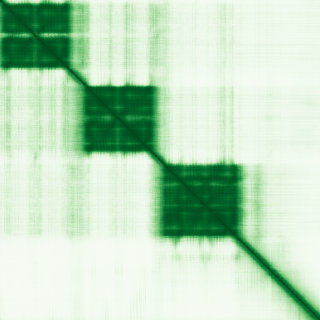
Mean pLDDT
73.7/ 100
Confident
386 residues
Confidence breakdown
- Very high(≥ 90)46%
- Confident(70–90)17%
- Low(50–70)7%
- Very low(< 50)31%
Open interactive 3D viewer
AlphaFold (Jumper et al., 2021) · CC BY 4.0
TIA1 cytotoxic granule associated RNA binding protein
Annotations refreshed 3 months ago.
Diagnostic Grade (Green)
Distal myopathies
MONOALLELIC, autosomal or pseudoautosomal, imprinted status unknownAdult onset neurodegenerative disorder
Arthrogryposis
Congenital myopathy
BOTH monoallelic and biallelic, autosomal or pseudoautosomalamyotrophic lateral sclerosis 26 with or without frontotemporal dementia
distal myopathy, Welander type
Abnormality of the skeletal system
hereditary disease
neoplasm
amyotrophic lateral sclerosis
tauopathy
hepatocellular carcinoma
colorectal carcinoma
esophageal squamous cell carcinoma
Score is the Open Targets composite evidence score (0-1). Higher = stronger gene-disease association.
Cytotoxic granule associated RNA binding protein TIA1
RNA-binding protein involved in the regulation of alternative pre-RNA splicing and mRNA translation by binding to uridine-rich (U-rich) RNA sequences (PubMed:11106748, PubMed:12486009, PubMed:17488725, PubMed:8576255). Binds to U-rich sequences immediately downstream from a 5' splice sites in a uridine-rich small nuclear ribonucleoprotein (U snRNP)-dependent fashion, thereby modulating alternative pre-RNA splicing (PubMed:11106748, PubMed:8576255). Preferably binds to the U-rich IAS1 sequence in a U1 snRNP-dependent manner; this binding is optimal if a 5' splice site is adjacent to IAS1 (By similarity). Activates the use of heterologous 5' splice sites; the activation depends on the intron sequence downstream from the 5' splice site, with a preference for a downstream U-rich sequence (PubMed:11106748). By interacting with SNRPC/U1-C, promotes recruitment and binding of spliceosomal U1 snRNP to 5' splice sites followed by U-rich sequences, thereby facilitating atypical 5' splice site recognition by U1 snRNP (PubMed:11106748, PubMed:12486009, PubMed:17488725). Activates splicing of alternative exons with weak 5' splice sites followed by a U-rich stretch on its own pre-mRNA and on TIAR mRNA (By similarity). Acts as a modulator of alternative splicing for the apoptotic FAS receptor, thereby promoting apoptosis (PubMed:11106748, PubMed:17488725, PubMed:1934064). Binds to the 5' splice site region of FAS intron 5 to promote accumulation of transcripts that include exon 6 at the expense of transcripts in which exon 6 is skipped, thereby leading to the transcription of a membrane-bound apoptotic FAS receptor, which promotes apoptosis (PubMed:11106748, PubMed:17488725, PubMed:1934064). Binds to a conserved AU-rich cis element in COL2A1 intron 2 and modulates alternative splicing of COL2A1 exon 2 (PubMed:17580305). Also binds to the equivalent AT-rich element in COL2A1 genomic DNA, and may thereby be involved in the regulation of transcription (PubMed:17580305). Binds specifically to a polypyrimidine-rich controlling element (PCE) located between the weak 5' splice site and the intronic splicing silencer of CFTR mRNA to promote exon 9 inclusion, thereby antagonizing PTB1 and its role in exon skipping of CFTR exon 9 (PubMed:14966131). Involved in the repression of mRNA translation by binding to AU-rich elements (AREs) located in mRNA 3' untranslated regions (3' UTRs), including target ARE-bearing mRNAs encoding TNF and PTGS2 (By similarity). Also participates in the cellular response to environmental stress, by acting downstream of the stress-induced phosphorylation of EIF2S1/EIF2A to promote the recruitment of untranslated mRNAs to cytoplasmic stress granules (SGs), leading to stress-induced translational arrest (PubMed:10613902). Formation and recruitment to SGs is regulated by Zn(2+) (By similarity). Possesses nucleolytic activity against cytotoxic lymphocyte target cells (PubMed:1934064)
TIA1 · P31483
Mean pLDDT
73.7/ 100
Confident
386 residues
Confidence breakdown
AlphaFold (Jumper et al., 2021) · CC BY 4.0