
AlphaFold predicted structure
TICAM1 · Q8IUC6
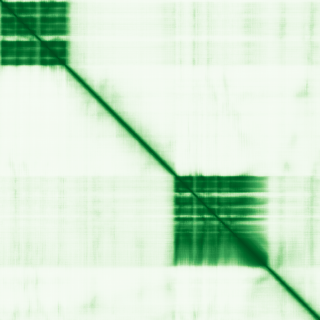
Mean pLDDT
62.8/ 100
Low
712 residues
Confidence breakdown
- Very high(≥ 90)23%
- Confident(70–90)21%
- Low(50–70)9%
- Very low(< 50)47%
Open interactive 3D viewer
AlphaFold (Jumper et al., 2021) · CC BY 4.0
TIR domain containing adaptor molecule 1
Annotations refreshed 2 months ago.
Diagnostic Grade (Green)
COVID-19 research
BOTH monoallelic and biallelic, autosomal or pseudoautosomalPrimary immunodeficiency or monogenic inflammatory bowel disease
BOTH monoallelic and biallelic, autosomal or pseudoautosomalHerpetic encephalitis
hypothyroidism
basal cell carcinoma
skin neoplasm
Hashimoto thyroiditis
inborn error of immunity
Oral ulcer
skin cancer
bile duct disorder
Graves disease
Score is the Open Targets composite evidence score (0-1). Higher = stronger gene-disease association.
TIR domain-containing adapter molecule 1
Involved in innate immunity against invading pathogens. Adapter used by TLR3, TLR4 (through TICAM2) and TLR5 to mediate NF-kappa-B and interferon-regulatory factor (IRF) activation, and to induce apoptosis (PubMed:12471095, PubMed:12539043, PubMed:14739303, PubMed:28747347, PubMed:35215908, PubMed:31511519). Ligand binding to these receptors results in TRIF recruitment through its TIR domain (PubMed:12471095, PubMed:12539043, PubMed:14739303). Distinct protein-interaction motifs allow recruitment of the effector proteins TBK1, TRAF6 and RIPK1, which in turn, lead to the activation of transcription factors IRF3 and IRF7, NF-kappa-B and FADD respectively (PubMed:12471095, PubMed:12539043, PubMed:14739303). Phosphorylation by TBK1 on the pLxIS motif leads to recruitment and subsequent activation of the transcription factor IRF3 to induce expression of type I interferon and exert a potent immunity against invading pathogens (PubMed:25636800). Component of a multi-helicase-TICAM1 complex that acts as a cytoplasmic sensor of viral double-stranded RNA (dsRNA) and plays a role in the activation of a cascade of antiviral responses including the induction of pro-inflammatory cytokines (By similarity)
TICAM1 · Q8IUC6
Mean pLDDT
62.8/ 100
Low
712 residues
Confidence breakdown
AlphaFold (Jumper et al., 2021) · CC BY 4.0