Skip to content
GenoLensGenoLens

TLR8

Chr Xp22.2

toll like receptor 8

Aliases:
CD288, hTLR8
MANE:
ENST00000218032.7

Annotations refreshed 9 hours ago.

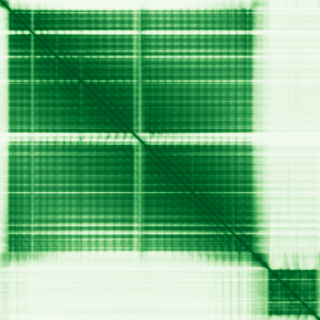
Predicted protein structure

Clinical relevance (Genomics England PanelApp)

Diagnostic Grade (Green)

  • Primary immunodeficiency or monogenic inflammatory bowel disease

    X-LINKED: hemizygous mutation in males, monoallelic mutations in females may cause disease (may be less severe, later onset than males)
  • Familial Meniere Disease

  • Intellectual disability

    X-LINKED: hemizygous mutation in males, monoallelic mutations in females may cause disease (may be less severe, later onset than males)

Disease associations (Open Targets)

  • immunodeficiency 98 with autoinflammation, X-linked

    0.74
  • osteoarthritis

    0.42
  • autoimmune hemolytic anemia

    0.37
  • Systemic autoinflammation

    0.37
  • lupus erythematosus

    0.33
  • autoimmune disorder of central nervous system

    0.17
  • systemic lupus erythematosus

    0.13
  • neoplasm

    0.11
  • common wart

    0.11
  • primary cutaneous T-cell non-Hodgkin lymphoma

    0.11

Score is the Open Targets composite evidence score (0-1). Higher = stronger gene-disease association.

Protein function (UniProt)

Toll-like receptor 8

Endosomal receptor that plays a key role in innate and adaptive immunity (PubMed:25297876, PubMed:32433612). Controls host immune response against pathogens through recognition of RNA degradation products specific to microorganisms that are initially processed by RNASET2 (PubMed:31778653). Recognizes GU-rich single-stranded RNA (GU-rich RNA) derived from SARS-CoV-2, SARS-CoV-1 and HIV-1 viruses (PubMed:33718825). Upon binding to agonists, undergoes dimerization that brings TIR domains from the two molecules into direct contact, leading to the recruitment of TIR-containing downstream adapter MYD88 through homotypic interaction (PubMed:23520111, PubMed:25599397, PubMed:26929371, PubMed:33718825). In turn, the Myddosome signaling complex is formed involving IRAK4, IRAK1, TRAF6, TRAF3 leading to activation of downstream transcription factors NF-kappa-B and IRF7 to induce pro-inflammatory cytokines and interferons, respectively (PubMed:16737960, PubMed:17932028, PubMed:29155428)

Data sources: HGNC (CC BY 4.0), AlphaFold (CC BY 4.0, Jumper et al. Nature 2021), Genomics England PanelApp (CC BY 4.0), ClinGen, Open Targets (CC0), UniProt.

Not for sole clinical decision-making. Always verify against primary sources.