AlphaFold predicted structure
TMEM63A · O94886
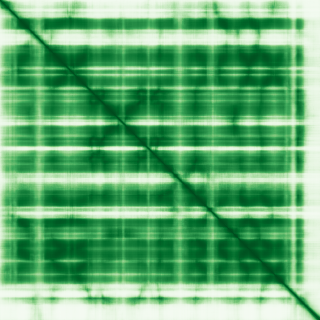
Mean pLDDT
74.1/ 100
Confident
807 residues
Confidence breakdown
- Very high(≥ 90)28%
- Confident(70–90)38%
- Low(50–70)16%
- Very low(< 50)19%
AlphaFold (Jumper et al., 2021) · CC BY 4.0
transmembrane protein 63A
Annotations refreshed 9 hours ago.
Diagnostic Grade (Green)
DDG2P
MONOALLELIC, autosomal or pseudoautosomal, imprinted status unknownWhite matter disorders and cerebral calcification - narrow panel
MONOALLELIC, autosomal or pseudoautosomal, NOT imprintedleukodystrophy
leukodystrophy, hypomyelinating, 19, transient infantile
hereditary disease
neurodegenerative disease
Abnormality of the skeletal system
diffuse large B-cell lymphoma
mixed connective tissue disease
neuroma
Global developmental delay
Parkinson disease
Score is the Open Targets composite evidence score (0-1). Higher = stronger gene-disease association.
Mechanosensitive cation channel TMEM63A
Mechanosensitive cation channel with low conductance and high activation threshold (PubMed:30382938, PubMed:31587869, PubMed:37543036). In contrast to TMEM63B, does not show phospholipid scramblase activity (PubMed:39716028). Acts as a regulator of lysosomal morphology by mediating lysosomal mechanosensitivity (By similarity). Important for the baby's first breath and respiration throughout life (PubMed:38127458). Upon lung inflation conducts cation currents in alveolar type 1 and 2 cells triggering lamellar body exocytosis and surfactant secretion into airspace (PubMed:38127458). Also acts as an osmosensitive cation channel preferentially activated by hypotonic stress (By similarity)
TMEM63A · O94886

Mean pLDDT
74.1/ 100
Confident
807 residues
Confidence breakdown
AlphaFold (Jumper et al., 2021) · CC BY 4.0