Skip to content
GenoLensGenoLens

TMEM63B

Chr 6p21.1

transmembrane protein 63B

Aliases:
DKFZp434P0531, dJ421H19.2
MANE:
ENST00000323267.11

Annotations refreshed 9 hours ago.

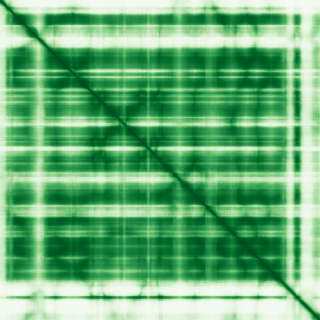
Predicted protein structure

Clinical relevance (Genomics England PanelApp)

Diagnostic Grade (Green)

  • DDG2P

    MONOALLELIC, autosomal or pseudoautosomal, imprinted status unknown
  • Early onset or syndromic epilepsy

    MONOALLELIC, autosomal or pseudoautosomal, NOT imprinted
  • Intellectual disability

    MONOALLELIC, autosomal or pseudoautosomal, NOT imprinted
  • Childhood interstitial lung disease

    BIALLELIC, autosomal or pseudoautosomal

Disease associations (Open Targets)

  • developmental and epileptic encephalopathy 118

    0.59
  • hereditary disease

    0.45
  • neurodegenerative disease

    0.27
  • hearing loss, autosomal recessive

    0.09
  • deafness

    0.09
  • autosomal dominant nonsyndromic hearing loss

    0.08
  • Usher syndrome

    0.08
  • Usher syndrome type 1

    0.08
  • Cone rod dystrophy

    0.07
  • familial long QT syndrome

    0.06

Score is the Open Targets composite evidence score (0-1). Higher = stronger gene-disease association.

Protein function (UniProt)

Mechanosensitive cation channel TMEM63B

Mechanosensitive cation channel with low conductance and high activation threshold (PubMed:37543036, PubMed:38127458). Osmosensitive cation channel preferentially activated by hypotonic stress (PubMed:37543036, PubMed:38127458). Also acts as a phospholipid scramblase in response to changes in membrane structure: upon changes in membrane curvature and thickness, alters its conformation and translocates phospholipids, such as phosphatidylcholine and sphingomyelin, thereby controlling plasma membrane lipid distribution (PubMed:39217145, PubMed:39424995, PubMed:39716028). Forms a heterodimer with SLC19A2, which mediates phospholipid scramblase activity following Ca(2+) stimulation (By similarity). Expressed in excitatory neurons of the subfornical organ and functions as a thirst receptor that mediates neuronal response to hyperosmolality to drive thirst and drinking behavior (By similarity). Facilitates intestinal motility by promoting proliferation of intestinal stem cells (By similarity). Essential for the baby's first breath and respiration throughout life (PubMed:38127458). Upon lung inflation conducts cation currents in alveolar type 1 and 2 cells triggering lamellar body exocytosis and surfactant secretion into airspace (PubMed:38127458). Acts as an osmosensor in cochlear outer hair cells (OHCs) where it mediates calcium influx and regulatory volume decrease response (By similarity). Required for the maintenance of OHC morphology, OHC survival and normal hearing (By similarity)

Data sources: HGNC (CC BY 4.0), AlphaFold (CC BY 4.0, Jumper et al. Nature 2021), Genomics England PanelApp (CC BY 4.0), ClinGen, Open Targets (CC0), UniProt.

Not for sole clinical decision-making. Always verify against primary sources.