AlphaFold predicted structure
TMEM63C · Q9P1W3
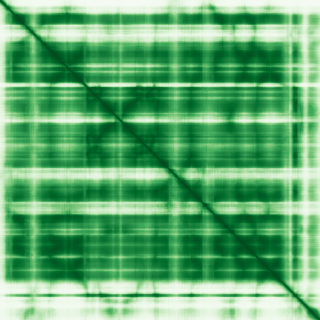
Mean pLDDT
74.3/ 100
Confident
806 residues
Confidence breakdown
- Very high(≥ 90)31%
- Confident(70–90)37%
- Low(50–70)13%
- Very low(< 50)19%
AlphaFold (Jumper et al., 2021) · CC BY 4.0
transmembrane protein 63C
Annotations refreshed 9 hours ago.
Diagnostic Grade (Green)
Childhood onset hereditary spastic paraplegia
BIALLELIC, autosomal or pseudoautosomalDDG2P
BIALLELIC, autosomal or pseudoautosomalIntellectual disability
BIALLELIC, autosomal or pseudoautosomalspastic paraplegia 87, autosomal recessive
mathematical ability
leukemia
Abnormality of the immune system
hypertrophic cardiomyopathy
hereditary spastic paraplegia
biliary tract disorder
Meckel syndrome
Megalencephaly - polymicrogyria - postaxial polydactyly - hydrocephalus
cobblestone lissencephaly without muscular or ocular involvement
Score is the Open Targets composite evidence score (0-1). Higher = stronger gene-disease association.
Osmosensitive cation channel TMEM63C
Acts as an osmosensitive cation channel preferentially activated upon hypotonic stress (PubMed:24503647, PubMed:35718349). In contrast to TMEM63B, does not show phospholipid scramblase activity (PubMed:39716028). Enriched in mitochondria-ER contact sites where it may regulate the metabolite flux and organelles' morphologies in response to osmotic changes (PubMed:35718349). In particular may regulate mitochondrial motility and function in motor neuron axons (PubMed:35718349). Required for the functional integrity of the kidney glomerular filtration barrier (By similarity)
TMEM63C · Q9P1W3

Mean pLDDT
74.3/ 100
Confident
806 residues
Confidence breakdown
AlphaFold (Jumper et al., 2021) · CC BY 4.0