Skip to content
GenoLensGenoLens

TMEM67

Chr 8q22.1

transmembrane protein 67

Aliases:
MGC26979, JBTS6, NPHP11
MANE:
ENST00000453321.8

Annotations refreshed 1 month ago.

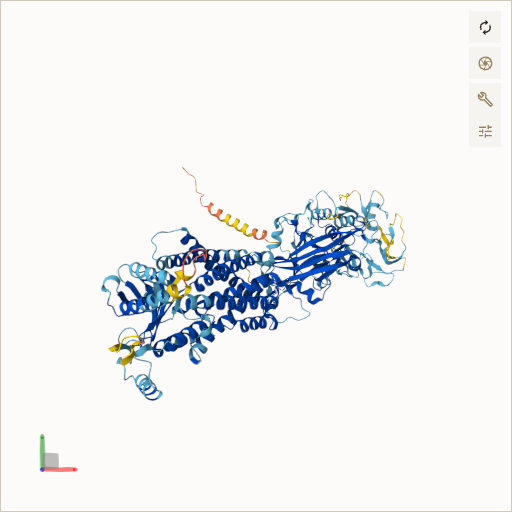
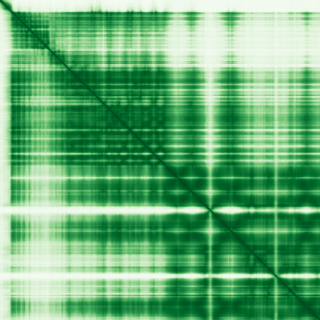
Predicted protein structure

Clinical relevance (Genomics England PanelApp)

Diagnostic Grade (Green)

  • Bardet Biedl syndrome

    BIALLELIC, autosomal or pseudoautosomal
  • Cystic kidney disease

    BIALLELIC, autosomal or pseudoautosomal
  • DDG2P

    BIALLELIC, autosomal or pseudoautosomal
  • Ductal plate malformation

    BIALLELIC, autosomal or pseudoautosomal
  • Fetal anomalies

    BIALLELIC, autosomal or pseudoautosomal
  • Intellectual disability

    BIALLELIC, autosomal or pseudoautosomal
  • Limb disorders

    BIALLELIC, autosomal or pseudoautosomal
  • Neurological ciliopathies

    BIALLELIC, autosomal or pseudoautosomal

+16 more panels — install the extension to see the full list inline on any page.

Disease associations (Open Targets)

  • Joubert syndrome with hepatic defect

    0.85
  • nephronophthisis 11

    0.82
  • Meckel syndrome, type 3

    0.82
  • Joubert syndrome 6

    0.82
  • Meckel syndrome

    0.77
  • Joubert syndrome

    0.77
  • RHYNS syndrome

    0.75
  • Bardet-Biedl syndrome 14

    0.73
  • Senior-Boichis syndrome

    0.68
  • nephronophthisis

    0.63

Score is the Open Targets composite evidence score (0-1). Higher = stronger gene-disease association.

Protein function (UniProt)

Meckelin

Required for ciliary structure and function. Part of the tectonic-like complex which is required for tissue-specific ciliogenesis and may regulate ciliary membrane composition (By similarity). Involved in centrosome migration to the apical cell surface during early ciliogenesis. Involved in the regulation of cilia length and appropriate number through the control of centrosome duplication. Is a key regulator of stereociliary bundle orientation (By similarity). Required for epithelial cell branching morphology. Essential for endoplasmic reticulum-associated degradation (ERAD) of surfactant protein C (SFTPC). Involved in the negative regulation of canonical Wnt signaling, and activation of the non-canonical cascade stimulated by WNT5A (PubMed:26035863). In non-canonical Wnt signaling, it may act as ROR2 coreceptor (By similarity)

Data sources: HGNC (CC BY 4.0), AlphaFold (CC BY 4.0, Jumper et al. Nature 2021), Genomics England PanelApp (CC BY 4.0), ClinGen, Open Targets (CC0), UniProt.

Not for sole clinical decision-making. Always verify against primary sources.